Showing posts with label Business. Show all posts

Thursday, July 25, 2013

Vietnam ethanol plant to be merged with oil refinery to cut costs

The Dung Quat Bio-Ethanol plant in the central province of Quang Ngai
Vietnam’s only remaining ethanol plant will be merged with the oil refinery at Dung Quat as a cost-cutting measure at a time of low demand.
BSR, a PetroVietnam subsidiary that owns the Dung Quat oil refinery, and Petrosetco, another subsidiary that owns the Dung Quat Bio-Ethanol, are wrapping up procedures for the merger.
The ethanol plant, which has a capacity of 330 tons per day, has been on a trial run since the start of last year.
The US$80-million plant, while awaiting the country’s switch to biofuels by 2015, has been exporting most of its output. 
News website VnExpress quoted BSR chairman Nguyen Hoai Giang as saying the company plans to produce E3 fuel, a blend of 3 percent ethanol and 97 percent gasoline, for use in the local Quang Ngai Province this year, and E5 for the whole central region a year later.
The cost of producing ethanol is around VND15,000 per liter while the export price is VND13,000.
Low domestic demand and the losses on exports caused the country's two other producers – Binh Phuoc Ethanol and Dai Tan Ethanol -- to temporarily close down and others to stop construction.
Biofuels remain unfamiliar to most people while their prices are nearly high as that of 92-RON, the most popular gasoline variety grade in the country.
The government plans to make the use of biofuels obligatory in seven cities by 2015.
The country, which produces 30 percent of the gasoline needed for domestic consumption, is expected to less rely on imports once it switches to domestically-made ethanol.
Vehicles using ethanol emit less pollutants than normal.
Source: thanhniennews.com

Let the online buyer beware


Vietnamese law struggles to keep pace with the boom in online shopping
A man browses for cell phones online. The rapid development of Vietnam’s e-commerce industry has led an increase in fraud, while a new government decree lacks punitive measures. Photo: Diep Duc Minh

Tran Minh Tan was delighted to find a used Sony Vaio laptop for just VND5 million (US$236) online.
The computer technician from Ho Chi Minh City’s Go Vap District transferred money to the seller’s account and was promised he would receive the computer within two days.
“It wasn’t until the fourth day that I realized I’d been cheated,” he said, adding that he found the laptop on a popular IT site.
Similar instances of fraud are becoming more commonplace in Vietnam, where the increase of Internet users has resulted in booming online consumerism, the management of which has been lax.
Vuong Ngoc Tuan of the Vietnam Standards and Consumers Association (Vinastas) said his agency has received an increase in complaints from online consumers over the past year.
Among them, Vo Thi Anh Hong said she ordered 15 pairs of contact lenses from the VickyDinh Company in Hanoi and transferred money into the account of Nguyen Thi Hoa, per instructions provided by the company’s site.
When Vinastas later made inquires to VickyDinh, the company responded by saying it had no record of any transactions involving Hong and that it has no knowledge of Hoa.
In another case, Nguyen Xuan Hiep of Bac Ninh Province bought a Lancaster watch from the BrandsFavor online store that arrived with scratches.
After repeated complaints, the online shop agreed to refund half of the money Hiep paid without providing further explanation.
Tuan said common e-commerce problems include the unclear origin of products, fake products, and those which arrive without receipts or which differ from how they were advertised.
“This enables sellers to easily evade responsibility after delivering products,” he said.
Tuan said the increased number complaints simply reflect the increase in online shopping.
According to the Vietnam Internet Network Information Center, the country had more than 31.3 million Internet users by the end of 2012, a significant segment of the country’s population of around 90 million.
A report by the Vietnam E-commerce and Information Technology Agency under the Ministry of Industry and Trade shows e-commerce revenues last year totaled VND7 trillion ($354 million), excluding those of unregistered online stores.
The agency estimated that Vietnam’s e-commerce revenues is on pace to reach $1.3 billion by 2015.
A report by the Ministry of Information and Communications found the proportion of local residents who buy goods online had risen by nearly 14 percentage points, up to 79.2 percent in 2012.
The proportion of residents to make payments online or use online banking were 57.3 percent last year, a threefold increase from 2011 and 11 times higher than 2010.
Risks well-publicized
Although Vietnam does not keep official statistics on the number of consumers victimized by e-commerce fraud, many cases have been reported widely by the local media of late.
Last month, police in Lao Cai arrested Nguyen Thuy Hien of the Muaban24 Online Trade and Training Company (MB24). She was just the latest MB24 employee to be arrested since last August. The firm is being investigated for fraud alleged to have cheated customers out of a total of more than VND700 billion ($32.92 million).
Police said while working for MB24 from July 2011 to September 2012, Hien worked her way up to become deputy director of the firm’s Lao Cai branch. During this time, she allegedly swindled more than VND2 billion from local consumers, transferring VND1.6 billion to the company and pocketing the rest.
Since being founded in August 2011, MB24 has been accused of persuading thousands of people, including farmers, students and teachers, into buying shops on the company’s online store. By the time the Lao Cai branch closed, it had sold 8,274 shops for approximately VND43 billion ($2 million), police said.
According to police findings, MB24 defrauded people by offering them online shops for VND5.2 million ($245.43), promising the opportunity to buy and sell goods at cheap prices.
But while people paid real money to the company, they received credit vouchers in return. Although they were told initially that the virtual money could be exchanged into cash, when shop owners attempted to cash in their credit, they were told to sell their credits to other shop owners.
In another case, customers who purchased coupons from the Nhom Mua Company were left high and dry after it shut down without warning late last year.
Many suppliers have refused its coupons, saying Nhom Mua still owes them money. The company resumed operations soon afterward.
Incomplete decree
In response to the burgeoning e-commerce crisis, the government issued a decree that took effect on July 1, but which has been criticized for its lack of comprehensiveness and punitive measures.
At a recent conference on implementing the decree, Nguyen Huu Linh, director of the Vietnam E-commerce and Information Technology Agency, admitted that it does not cover all e-commerce activities, only the most common issues.
The decree bans multilevel marketing, the sale of fake and illegal products, swindling; and the hacking and sale of consumers’ confidential information.
Websites selling coupons must give customers refunds if their coupons are rejected by relevant retailers.
According to the decree, the Ministry of Industry and Trade is responsible for publishing a list of online trading websites that violate the decree, as well as those that receive complaints.
Nguyen Van Tuan, e-commerce director of the Vietnam Communications Corporation, said the decree only covers half the problems the industry currently faces.
“There are no penalties and insufficient regulations regarding payment systems,” VOV news website quoted him as saying.
“For example, it is still difficult to calculate the actual value of many online deals,” he said, adding that his company has six years experience in the field and found several problems.
He also said it is wrong for the decree to stipulate that online firms merely accused of wrongdoing be publicized.
Deputy minister of Industry and Trade Tran Tuan Anh said the government will amend the decree after it is implemented, explaining that Vietnam’s e-commerce industry still lags behind those of the region and the world.
“The ministry is drafting penalties against e-commerce fraud that are expected to be approved by the year’s end.”
source: thanhnienews.com

Wednesday, May 15, 2013

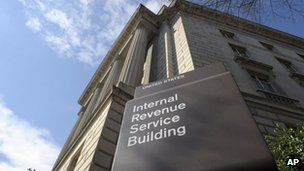
IRS targeting of conservative groups intolerable - Obama


US President Barack Obama has said the federal tax agency's targeting of conservative groups for extra scrutiny was "intolerable and inexcusable".
The treasury department's inspector general
 will release a report on the matter this week
He said those who carried out the Internal Revenue Service's (IRS) actions would be held responsible.
Mr Obama spoke after a treasury department report placed the blame on "ineffective management" at the agency.
The US attorney general earlier ordered an FBI inquiry into the IRS conduct before the 2012 presidential election.
Eric Holder told a news conference that agents would determine if any laws had been broken.
The actions of tax officers, if not criminal, were "certainly outrageous and unacceptable", Mr Holder added.
'Inappropriate criteria'
The IRS had used key words such as "Tea Party" and "Patriot" to subject applications by groups seeking tax-exempt status for extra scrutiny.
On Tuesday evening, Mr Obama said in a statement on the treasury department's investigation: "The report's findings are intolerable and inexcusable.
"The IRS must apply the law in a fair and impartial way, and its employees must act with utmost integrity. This report shows that some of its employees failed that test."
He spoke as a Treasury Inspector General for Tax Administration (TIGTA) report found that senior IRS officials had told inspectors the decision to focus on Tea Party and other groups based upon their names or policy positions was not influenced by any individual or organisation outside the agency.
But it found managers had allowed "inappropriate criteria" to be developed and stay in place for more than 18 months, resulting in "substantial delays" in processing applications for tax-exempt status, and requests for "unnecessary information", such as lists of past and future donors.
Of the 296 total applications reviewed by TIGTA, 108 were approved, 28 were withdrawn by the applicants, and 160 were still open, the report said.
In response, the acting IRS Commissioner of the Tax Exempt and Government Entities, Joseph Grant, said: "We believe the front line career employees that made the decisions acted out of a desire for efficiency and not out of any political or partisan view point."
'Targeting political enemies'Mr Obama's press secretary, Jay Carney, said earlier that no-one at the White House had known about the matter until lawyers were told several weeks ago TIGTA would publish a report.
This is big brother come to life”
At least three Congressional committees are planning hearings into the matter.
The House Ways and Means committee will hold a hearing on Friday. The Senate finance and investigations committees have also said they will hold hearings.
"This was a targeting of the president's political enemies, effectively, and lies about it during the election year so that it wasn't discovered until afterwards," senior Republican Congressman Darrell Issa told CBS on Tuesday.
Two high-profile Republican governors called on President Obama to appoint a special prosecutor to investigate whether any laws were broken.
"This is big brother come to life and a witch hunt to prevent Americans from exercising their first amendment [free speech] rights," Governors Bobby Jindal of Louisiana and Scott Walker of Wisconsin wrote.
Ahead of the 2012 presidential election, conservative groups complained to the IRS and to members of Congress that their applications for tax-exempt status were being held up.
Some groups have said they were asked to provide lists of donors and volunteers, statements of their activities, and lists of legislators they had contacted.

Source: bbc.co.uk

Thursday, May 02, 2013

Vietnam welcomes waves of Russian tourists

While the number of tourists from other European countries has been on a decline, common tourism spots around Vietnam are being flooded by Russian holidaymakers.
A Russian tourist is seen shopping at Nha Trang Center in Nha Trang April 29, 2013
Around 130,550 Russian tourists visited Mui Ne last year, accounting for 36.7 percent of the total number of foreign holidaymakers, according to Binh Thuan Province’s tourism department.
“People usually think Russian tourists tend to practice thrift during their tours, but they in fact can spend up to VND2 million a day, so long as the services are of good quality,” said Nguyen Quoc Khanh, owner of a restaurant at Mui Ne, where groups of Russian-speaking travelers were spotted on April 30.
There are so many Russians in the area that many restaurants, ticket agents, cafés, and massage parlors have their menus written in Russian, Khanh said.
Mui Ne has emerged as a peaceful and low-cost relaxing destination for Russian holidaymakers, according to Alexandre and his wife, Cawa, a couple from Irkutsk.
Ton That Hung, who works at Coco Café, a tour organizer, said Russians account for nearly 30 percent of the company’s total customers.
Meanwhile, Tran Anh Thi, managing director of Seahorse hotel, said 45 percent of the facility’s current customers are Russian.
“However, while Russian tourists want to enjoy more than just beach bathing and eating seafood, local services fail to meet their demand,” he noted.
1,000 arrivals per day
Similarly, Russian tourists also flood foreigners’ quarters in Nha Trang these days.
Ngo Vo Bach Viet, head of the Nha Trang representative office of Anh Duong Travel Co, said his company is bringing some 1,000 Russian tourists to the coastal city on a daily basis via 19 direct flights between the area and 22 cities in the Eurasian country.
Russian travelers topped the list of foreign tourists to Nha Trang over the last two years, according to Khanh Hoa Province’s tourism department. The coastal city welcomed around 100,000 Russian tourists last year, the department said.
“There are three to five Russian tourism delegations, or 300 tourists, shopping at Nha Trang Center everyday,” said Nguyen Thi Gia Thao, chief of human resources of the commercial center.
Russian holidaymakers account for 70 percent of total foreign customers, and 50 percent of the total revenues, according to Nguyen Huu Nghia, deputy CEO of the Hoan Cau Khanh Hoa Co Ltd, the operator of the shopping center.
More Russian-speaking tour guides
Although the number of Russian tourists to Vietnam has constantly risen, the figure is still modest compared to the 45 million exits from Russia for overseas holiday every year, according to tourism experts.
Vietnam thus has to continue to boost the tourism promotion to lure more customers, and investing more on the training of Russian-speaking tour guides, they said.
The Ministry of Culture, Sports, and Tourism has recently approved a VND6.3 billion program for Khanh Hoa to have a well-trained force of Russian-speaking tour guides.
“Russian tourists will be the main market of Nha Trang in the future, and we are considering organizing new cultural activities and increasing the quality of local services to serve them,” said Truong Dang Tuyen, director of Khanh Hoa Department of Culture, Sports, and Tourism.

Source: tuoitrenews.vn

Thursday, April 25, 2013

Asia Stocks Near Two-Year High as Investors Weigh Profit Reports


Source bloomberg.
Asian stocks rose, with the regional benchmark index touching the highest intraday level since May 2011, as investors weighed earnings reports and energy shares led gains.
China Petroleum & Chemical Corp., the nation’s largest refiner, increased 1.4 percent after Morgan Stanley said China’s cut in fuel prices will benefit the company. Nidec Corp., the world’s largest maker of hard-disk drive motors, gained more than 6 percent for a second day in Osaka, Japan, after fiscal- year net income beat forecasts. Canon Inc. (7751), the world’s biggest camera maker, slid 6 percent after its income forecast missed analysts’ estimates on slumping demand for compact models.

The MSCI Asia Pacific Index added 0.3 percent to 139.36 at 11:38 a.m. in Tokyo, with about the same number of companies falling and rising. The gauge is headed for its highest close since May 3, 2011.
“We have to look at earnings and wait to see if the first- quarter earnings are really good or bad,” said Grace Tam, Hong Kong-based global market strategist at JPMorgan Asset Management Ltd., which oversees about $1.3 trillion globally. “So far, it’s not really been impressive. In Asia, we don’t have an inflation threat. Inflation has been pretty benign and this is a positive factor for Asian equities because Asian economies are net importers of oil.”
The MSCI Asia Pacific Index gained 7.4 percent this year through yesterday amid optimismJapan will deploy more measures to beat deflation and that policy makers in the U.S. and China remain on standby to support growth. The Asian benchmark traded at 14.1 times estimated earnings yesterday, compared with 14.3 times for the S&P 500 and 12.8 times for the Stoxx Europe 600 Index.

Nikkei, Kospi

Japan’s Nikkei 225 Stock Average climbed 0.1 percent after slipping 0.1 percent, while the broader Topix Index added 0.3 percent, as data showed foreign investors were net sellers of the nation’s equities last week. The Kospi Index (KOSPI) increased 0.4 percent as South Korea’s economy grew the most in two years in the first quarter. Markets in Australia and New Zealand are closed for a public holiday.
Hong Kong’s Hang Seng Index (HSI) climbed 0.4 percent and China’s Shanghai Composite Index retreated 0.7 percent. Taiwan’s Taiex Index slid 0.1 percent.
More than 60 companies on the MSCI gauge are scheduled to report earnings today, according to data compiled by Bloomberg. Of the 69 firms which have reported quarterly results since April 1, and for which Bloomberg has estimates, 51 percent have exceeded profit forecasts.
Investors are weighing how the yen’s decline will improve the earnings outlook for Japanese exporters.
The yen has declined against all of its 16 major counterparts since April 4, when the Bank of Japan (8301) said it will double the amount of money circulating in the economy by the end of 2014 by buying government bonds, its boldest round of quantitative easing. The BOJ will convene tomorrow.
“The market has yet to show a definitive direction as investors wait for catalysts,” said Toshihiko Matsuno, a strategist at Tokyo-based SMBC Friend Securities Co., a unit of Sumitomo Mitsui Financial Group Inc., Japan’s second-biggest lender by market value. “A weaker yen is helping Japanese companies, but you need to look at each stock to figure out if the yen’s drop is coming on top of a company’s solid business or it’s being overshadowed by poor performance.”
Futures on the Standard & Poor’s 500 Index (SPXL1) were little changed today. The index rose just 0.01 point yesterday in New York, as investors weighed quarterly earnings.
To contact the reporter on this story: Yoshiaki Nohara in Tokyo at ynohara1@bloomberg.net
To contact the editor responsible for this story: Nick Gentle at ngentle2@bloomberg.net.

Wednesday, April 24, 2013

Thais Flock to Japan as Weak Yen Means Bargains: Southeast Asia

Cherry trees blossom as pedestrians walk in front of
 buildings including the Tokyo Sky Tree, center, in Tokyo,
 Japan. Photographer: Tomohiro Ohsumi/Bloomberg

The Thai baht’s biggest quarterly gain against the yen since 1998 was enough reason for Kornkarun Cheewatrakoolpong, a 32-year-old economics lecturer in Bangkok, to change her honeymoon destination to Japan from Italy.
“It’s more affordable,” Kornkarun said in an interview from her home in the capital on April 17, after returning from a business trip to Japan. “I don’t feel it’s that expensive like in the past. I still expect that when I go for my honeymoon in November, the yen will remain weak.”
Kornkarun followed 36,000 Thai tourists who headed to Japan in the first two months of the year, 31 percent more than the same period of 2012 and the largest increase among five major Southeast Asian countries, according to data from the Japan National Tourist Organization. The baht, Asia’s best-performing currency in 2013, strengthened 14 percent versus the yen in the three months through March before rising a further 6.3 percent in April, making costs for accommodation, shopping and food cheaper for visitors from Thailand.
Tourists look towards the Tokyo Skytree at the Sensoji temple
in Tokyo, Japan. Photographer: Tomohiro Ohsumi/Bloomberg
The rise in tourists caused a shortage of yen banknotes in Thailand, central bank Governor Prasarn Trairatvorakul told reporters in Bangkok on April 9, before the nation’s markets closed for the four-day New Year holiday, known as Songkran. The Bank of Japan’s monetary easing, coupled with increasing investment, helped drive the baht to the strongest against the yen in five years on April 22. Japan’s currency may weaken to 100 per dollar for the first time since 2009 by year-end, according to 54 analysts surveyed by Bloomberg.

Relatively Cheaper

Japan’s currency has depreciated 19 percent versus the greenback since mid-November, when Prime Minister Shinzo Abe, then running for office, began a campaign to talk down the value of the exchange rate to revive the export-led economy. The weaker yen boosts competitiveness of Japanese goods such as cars made by Toyota Motor Corp. (7203)Nissan (7201) Motor Co. and Honda (7267) Motor Co.
The Bank of Japan announced April 4 it would buy 7.5 trillion yen ($76 billion) of debt a month, spurring outflows to higher-yielding assets. The BOJ’s benchmark interest rate is 0.1 percent, compared with the Bank of Thailand’s 2.75 percent.
The yen has weakened against all of the world’s 16 major currencies in 2013 and is leading losses in Asia, according to data compiled by Bloomberg. The exchange rate has declined almost 18 percent versus the baht this year, which if sustained would be the biggest annual drop since at least 1992.
“The yen’s weakness accelerated, especially against Asian currencies, and that encourages inflows of tourists,” Takahiro Sekido, a strategist in Tokyo at Bank of Tokyo-Mitsubishi UFJ Ltd., who formerly worked at the Bank of Japan, said in an April 22 telephone interview. “Things in other Asian countries are also getting more expensive, so when you shop in Japan and convert prices back to your own currency, people may feel things are much cheaper here.”

Reversal Signal

Bank of Thailand Governor Prasarn told reporters in Bangkok on April 19 that the baht’s advance has started to move beyond fundamentals. It reached 28.56 per dollar on April 19 and April 22, the strongest level since a devaluation in July 1997 that sparked the Asian financial crisis. The currency traded at 28.80 late yesterday, while one baht was buying 3.42 yen compared with 2.82 yen at the end of last year.
While ruling out imposing capital restrictions, Prasarn said on April 9 that the central bank stands ready to intervene should the currency move against fundamentals.
Some trading patterns show the baht is poised to fall. The dollar’s 14-day relative-strength index stayed below 30 between April 16 and April 22, a level that signals the greenback may be poised to rebound. Stochastics, which measure the price of a security relative to its highs and lows during a particular period, have fallen below 30 since March 12.

Passenger Traffic

Sisdivachr Cheewarattanaporn, president of the Association of Thai Travel Agents in Bangkok, predicts the number of tourists to Japan will increase 15 percent this year, without providing specific or historical numbers.
“Japan has always been a popular destination for Thai people, but the strong baht made it even more attractive,” Sisdivachr said in an April 17 telephone interview from Bangkok. “A lot of Thais are going to Japan for shopping and sightseeing as they feel they will spend less than before.”
The country’s national airline, Thai Airways International (THAI) Pcl, saw the percentage of its seats filled for routes in Asia, including Japan, climb 7.6 percent in the first two months of the year to 76.8 percent, while those to Europe and North Pacific fell 3.2 percent and 6.6 percent, respectively, according to its website.
“We have seen rising numbers of Thai shoppers to Japan in the last couple of months,” Danuj Bunnag, executive vice president of Thai Airways, said in a phone interview from his office in Bangkok on April 22. “Bookings in the next few months are also looking good.”

78th Province

For Prapharat Tangkawattana, a 45-year-old chief financial officer, the weakening baht meant a 33 percent saving for a three-night stay at the Hilton Niseko over similar graded hotels on the southern Thai island of Ko Samui.
Prapharat, who started her trip in the ski resort on the northern island of Hokkaido and travels to Japan almost every year, paid 9,000 yen for a night’s board at the Hilton. She also dropped by a shop in Tokyo’s upmarket shopping and tourist district of Ginza during her visit and bought a Rolex Perpetual Datejust watch on a whim because it was the equivalent of 74,000 baht cheaper than in Thailand, a nation of 77 provinces.
She ran into her Thai friends three times in Tokyo which she said was “unbelievable.”
“Tokyo is like the 78th province of Thailand,” Prapharat said in an April 17 telephone interview in Bangkok. “I felt that the cost of eating and accommodation was so cheap during this trip.”
To contact the reporters on this story: Yumi Teso in Bangkok at yteso1@bloomberg.net; Suttinee Yuvejwattana in Bangkok at suttinee1@bloomberg.net.
To contact the editors responsible for this story: James Regan at jregan19@bloomberg.net; Stephanie Phang at sphang@bloomberg.net
Source Bloomberg.com

Tuesday, April 16, 2013

Kịch bản dối lừa trong vụ 'nho Big C gắn cờ Trung Quốc'


Thiên Minh - Hoàng Thắng (Petrotimes) - Ngày 15/4, bà Nguyễn Thị Như Mai – Trưởng Chi cục quản lý thị trường (QLTT) Hà Nội đã thông báo kết quả xử lý vụ "nho Big C gắn cờ Trung Quốc". Tuy nhiên, kết quả này đã nhanh chóng vấp phải sự phản ứng mạnh mẽ từ dư luận. Và một kịch bản dối lừa đã được phanh phui.
Đảo chiều: Nho Big C có nguồn gốc từ chợ Long Biên 
Ngày 15/4 Chi cục QLTT Hà Nội đã cung cấp thông tin cho rằng nho xanh bán tại Big C có dán cờ Trung Quốc có xuất xứ từ Ninh Thuận. Tuy nhiên, "tình tiết lạ" đã xuất hiện: Nhà cung cấp nho cho Big C được "đá" ra mãi chợ Long Biên chứ không phải là công ty Minh Quang như Big C tuyên bố lúc đầu. 
Theo đó, ngày 15/3, một khách hàng đến siêu thị Big C The Garden mua nho và phát hiện những khay nho xanh bày bán tại siêu thị có dán cờ Trung Quốc nhưng tem nhãn lại ghi "nho xanh Việt Nam". Big C tuyên bố đây là nho do công ty Minh Quang cung cấp. 

 Trong lần làm việc với PV Petrotimes, bà Bùi Thị Dung, Giám đốc Công ty Minh Quang cũng khẳng định: Nho xanh bán ở Big C là do công ty của bà cung cấp. Chúng tôi đưa ra một khay nho vừa mua ở Big C, bà Dung nhận ngay là nho của công ty mình. 
Cả Big C và Minh Quang đều khẳng định nho gắn cờ Trung Quốc là của Minh Quang cung cấp nhưng sau hơn 1 tháng "điều tra", số nho này lại được "đá" ra mãi chợ Long Biên. 
Một kịch bản hợp thức hóa tài tình được công bố chiều 15/4 như sau: 
1. Sau nhiều lần làm việc, công ty Minh Quang nhận là: Từ ngày 22/3 mới cung cấp nho cho Big C còn lô sản phẩm nho trước đó không liên quan. Vậy nên nho mà khách hàng bắt gặp trong Big C không phải là nho của Minh Quang. 
Vừa nhìn thấy khay nho, bà Dung đã
khẳng định đó là nho của mình cung cấp
 Mặc dù, trong buổi trả lời PV Petrotimes sáng 26/3, Bùi Thị Dung - giám đốc công ty Minh Quang khẳng định: "Mỗi ngày công ty Minh Quang cung cấp khoảng 50-70 kg nho xanh cho hai siêu thị là Big C The Garden và Big C Thăng Long. Tất cả số nho được đóng vào hộp nhựa lớn 10kg. Việc đóng gói và dán tem mác lên sản phẩm là do phía siêu thị đảm nhận." 
Theo lời bà Dung, công ty Minh Quang ký hợp đồng cung cấp hoa quả cho Big C từ nhiều năm nay và đây là lần đầu tiên sản phẩm do công ty Quang Minh cung cấp gặp sự cố. 
Bà Dung cũng khá thật thà thổ lộ: Không biết địa chỉ, số điện thoại hay liên hệ của người bà con ở cung cấp nho ở Ninh Thuận... 
2. Big C The Garden lên tiếng thừa nhận do sơ suất trong công tác quản lý giấy tờ nên nhầm lẫn và cho biết số nho gắn cờ Trung Quốc không phải mua của Minh Quang mà là từ... chợ Long Biên. 
Cụ thể là mua của bà Phạm Thị Hảo ở kiot 83 – 84 chợ Long Biên. Bà Hảo có hóa đơn chứng từ cấp cho Big C và khai nhận mua lại nho của bà Cao Thị Vượng - một hộ kinh doanh tại cổng chợ Long Biên. Bà Vượng nhận là mua nho từ Ninh Thuận. 
3. Đội quản lý thị trường số 3 làm việc với Ban quản lý chợ Long Biên và cho rằng bà Nguyễn Thị Ánh Thịnh, Phó ban quản lý chợ khẳng định trong tháng 3, chợ Long Biên không có nho xanh Trung Quốc; nho Trung Quốc chỉ có ở chợ Long Biên vào tháng 6 và 7. 
Thế nhưng, trong ngày 26/3, phóng viên Petrotimes đã ra chợ Long Biên, mua được nho Trung Quốc (tiểu thương thừa nhận nhập từ cửa khẩu Cốc Lếu, Lào Cai) để về so sánh. Độc giả có thể xem bức ảnh dưới đây (Ảnh đã được đăng trong bài viết "Có một 'trung gian ảo' vụ 'nho Việt Nam gắn cờ Trung Quốc?" vào ngày 26/3). 
Nho xanh Trung Quốc (bên phải) nhập từ cửa khẩu Lào Cai 
mà phóng viên Petrotimes mua tại chợ Long Biên vào ngày 26/3. 
Thế mà có người hồn nhiên tuyên bố là tháng 3 không có nho xanh Trung Quốc ở chợ Long Biên! 
4. Big C cũng nhanh chóng kiếm được một văn bản xác nhận từ Chủ tịch Hiệp hội nho Ninh Thuận cho rằng trong tháng 3 có một số lượng nho Ninh Thuận được đưa ra thị trường phía Bắc tiêu thụ. 
Tuy nhiên, trước đó, ông Nguyễn Văn Mọi - Phó chủ tịch Hiệp hội nho Ninh Thuận tuyên bố chắc chắn rằng: Nho Ninh Thuận chỉ cung cấp cho địa chỉ duy nhất ở quận Hai Bà Trưng, Hà Nội. Ông Mọi thậm chí còn cử chuyên gia Trần Mạnh Chiến đi xác minh. Kết quả là ông Chiến bị nhà cung cấp Minh Quang "tránh mặt". 
Một số nguồn tin riêng của Petrotimes cho biết, trong những ngày xảy ra sự cố, nhân viên của Minh Quang chạy như con thoi ra vào Ninh Thuận. Đúng như dự đoán của ông Trần Mạnh Chiến "Đợt này nho Ninh Thuận đang vào mùa, sản lượng lớn nên nếu các đơn vị ngoài Hà Nội vào đặt vấn đề mua nho. Đồng thời họ có thể xin thêm giấy tờ hợp thức hóa việc mua bán từ trước tới nay. Nếu họ giở trò này thì mọi hoài nghi coi như đi vào ngõ cụt" 
Và trên thực tế, đã có 1 văn bản được thu xếp ra đời, mặc dù nó cũng khá mù mờ, không khẳng định được nho ở Big C là nho Ninh Thuận nhưng cũng đủ làm cho dư luận hiểu sang một hướng khác. 
5. Big C im lặng để "câu giờ", có đủ thời gian hợp thức hóa.
Lúc đầu Big C tuyên bố hùng hồn: “Đây là nho xanh được trồng ở vùng Ninh Thuận, do doanh nghiệp Minh Quang có trụ sở ở Đan Phượng cung cấp và đầy đủ giấy tờ theo quy định. Việc xuất hiện cờ Trung Quốc trên nho chỉ là nhầm lẫn trong khâu đóng gói sản phẩm”. 
Đến khi không thể trốn tránh mãi trước những bằng chứng do Petrotimes phanh phui, Big C lại phủ nhận tuyên bố này và "đổ thẳng" ra chợ Long Biên. Một động thái hợp thức hóa tài tình và bất ngờ với tất cả. 
Cuối cùng là một kết luận làm an lòng dư luận được đưa ra: 
Siêu thị Big C thừa nhận dùng cờ các nước dán vào sản phẩm là vi phạm khoản 7 điều 30, Nghị định 75 về quy định xử phạt hành chính trong lĩnh vực văn hóa trong đó có nội dung quảng cáo tại Luật Quảng cáo. Với lỗi này, lực lượng quản lý thị trường xử phạt Big C The Garden 35 triệu đồng. Trong quá trình kiểm tra, lực lượng chức năng phát hiện một số sản phẩm nho có in nhãn hàng hóa không rõ ràng. 
Vụ việc được hợp thức hóa đúng như dự đoán của ông Trần Mạnh Chiến và phóng viên Petrotimes. 
Vậy là nghi án "gian thương", "gián điệp" trong vụ dán cờ Trung Quốc lên nho Việt Nam của Big C đã chuyển hóa một cách tài tình như vậy. 


The Price of Gold Is Crashing. Here's Why


A chart of the crashing price of gold looks like a wedding ring rolling off a table. Gold futures for June delivery closed at $1,361 an ounce on the Comex in New York today, a drop of more than $200 in two sessions. Gold’s fall of 13 percent since April 11 was the biggest two-session decline since 1980.
Why is gold plunging? The most important factor is that global inflation is falling, reducing gold’s value as a hedge against rising prices. Gold bugs who were betting on an outburst of inflation are scrambling to reverse their bets and exit their gold positions at any price.
For consumers struggling to make ends meet, it may seem hard to believe that inflation is falling. But the evidence is clear from JPMorgan Chase’s (JPM) global consumer price index, which covers more than 30 countries that collectively represent more than 90 percent of world economic output.
According to the JPMorgan index, global inflation peaked at 4 percent in 2011 and has fallen steadily since. Global prices in February were up only about 2.5 percent from a year earlier, the bank’s index says.
JPMorgan has two scenarios for what happens next. Its main one is based on a “bottom-up” collection of analysts’ forecasted price trends sector by sector around the world. That shows inflation rising very slightly from its current level for the rest of 2013. In contrast, JPMorgan’s “top-down” analysis, which is prepared by the banks’ economists and takes into account prices of commodity futures contracts, among other factors, shows inflation moving down closer to 2 percent in the second half of 2013.
The headline on JPMorgan’s report: “The slide in global inflation may not be over.”
Joseph Lupton, a senior global economist at JPMorgan Chase, said in an interview that the inflation decline is partly a matter of supply bottlenecks easing, which is a good thing, and demand growth slowing, which is not so good. Lupton said he’s not in the business of forecasting gold prices, which tend to be whipsawed by speculation more than other commodity prices are. Says Lupton: “Gold is an animal in and of itself.”
Last week Goldman Sachs (GS) warned that the retreat in gold was accelerating after the longest rally in nine decades.
“Anybody who did some buying before this big drop is probably in some pain,” Donald Selkin, who helps manage about $3 billion of assets as chief market strategist at National Securities Corp. in New York, told Bloomberg News. “The perception is that gold is not really needed as a safe haven. People are looking at the stock market, and they’re stunned, and there’s no inflation. So people are saying, ‘What do we need gold for?’”

Monday, April 15, 2013


Đại học Kinh tế và Chính trị London LSE yêu cầu BBC không phát phóng sự điều tra về Bắc Hàn do phóng viên giả danh sinh viên LSE thực hiện.
Trường này nói phóng viên BBC John Sweeney đã đóng giả là sinh viên đang làm luận văn tiến sỹ và tham gia chuyến đi do hội sinh viên LSE tổ chức để quay phim bí mật.
Chương trình Panorama về Bắc Hàn sẽ được phát vào tối ngày 15/4.
LSE nói các sinh viên đã "không được cung cấp đủ thông tin để đồng ý có chủ đích" và đã bị kéo vào tình cảnh "nguy hiểm".
Phóng viên John Sweeny trong khi đó nói các sinh viên đã được thông báo rằng một nhà báo sẽ đi cùng họ nhưng trường LSE không được thông báo vì đó không phải là chuyến đi do trường tổ chức.

'Nhà nước Phát xít'

Trả lời phỏng vấn đài BBC Radio 4, ông Sweeney nói: "Thật là lạ lùng khi LSE tự nói thay cho các sinh viên LSE. Đó là điều hoàn toàn sai trái khi họ muốn hủy chương trình này.
"Chúng tôi không đồng tình với những gì LSE tuyên bố. Tôi không thể nói thay các sinh viên đó được - họ là người lớn, những người tốt và dũng cảm.
"Tất cả những sinh viên đó có thể nộp tôi, nhưng họ đã không làm vậy.
"Đa số sinh viên đã ủng hộ chương trình."
John Sweeney đã có tám ngày quay lén ở Bắc Hàn. Ông đi cùng vợ và người quay phim.
Sweeney nói Bắc Hàn là "nhà nước Phát xít" và có "hình thức kiểm duyệt ngặt nghèo nhất".
Ông nói thêm: "Nó giống với nước Đức của Hitler hơn bất kỳ nhà nước nào khác trên thế giới.
"Đó là nơi đáng sợ, âm u và ác độc."
Tuy nhiên, trong một email gửi cho giảng viên và sinh viên, LSE nói: "Quan điểm của LSE là các sinh viên không được cung cấp đủ thông tin để đồng ý có chủ đích, nhưng lại được cho đủ thông tin để khiến họ gặp nguy hiểm nghiêm trọng nếu vỏ bọc bị phát hiện trước khi họ rời Bắc Hàn.
"Mặc dù chuyến đi này do hội sinh viên tổ chức, các khía cạnh về Bắc Hàn là đối tượng nghiên cứu của một số bộ môn do tính chất của việc giảng dạy và nghiên cứu của LSE.
"Hành động của BBC có thể làm phương hại nghiêm trọng uy tín học thuật thuần túy của LSE và có thể gây bất lợi nghiêm trọng cho các chuyến đi trong tương lai của sinh viên và giảng viên LSE nhằm nghiên cứu Bắc Hàn và cũng có thể là cả các nước khác khi có nghi ngờ về nghiên cứu học thuật độc lập."
Trường nói họ "hoàn toàn ủng hộ nguyên tắc về các điều tra báo chí nhằm phục vụ công chúng" nhưng không thể chấp nhận việc sử dụng tên hay học sinh của trường "làm vỏ bọc cho những hoạt động như vậy".
LSE cũng nói hai người làm việc cho BBC cũng đi cùng chuyến đi. "Trong suốt thời gian trước chuyến đi, người ta không nói rõ cho sinh viên biết một nhóm ba người của BBC có kế hoạch dùng chuyến đi làm vỏ bọc cho phim tài liệu lớn sẽ chiếu trên chương trình Panorama," LSE nói.

'Bắt giữ'

LSE nói Tổng giám đốc BBC Tony Hall đã từ chối đề nghị hủy chương trình và "đưa ra lời xin lỗi đối với LSE vì nhân viên BBC đã sử dụng trường và uy tín của trường để lừa dối."
Tờ báo của công đoàn sinh viên LSE, tờ Beaver, dẫn lời Alex Peters-Day, Tổng thư ký Công đoàn Sinh viên LSE nói "BBC không thể đưa ra quyết định thay cho sinh viên tham gia chuyến đi và BBC cũng không được gây nguy hiểm cho toàn bộ cộng đồng thuộc trường."
Một sinh viên giấu tên của trường, người tham gia chuyến đi nói với Beaver rằng "chúng tôi không được biết sự hiện diện của vài phóng viên BBC vào lúc bay đi Bình Nhưỡng.
"Chúng tôi nghĩ John Sweeney là giáo sư sử học cho dù sau đó người ta có ý nói rằng ông ấy không phải là giáo sư ở LSE."
Bản thân Hiệu trưởng LSE, Craig Calhoun, nói trên Twitter rằng "chương trình của BBC đã khiến sinh viên LSE gặp nguy hiểm nhưng không có vẻ tìm ra được thông tin gì mới và chỉ chiếu những gì Bắc Hàn muốn khách du lịch thấy."
Một phát ngôn viên của BBC nói: "Chúng tôi công nhận rằng vì chuyến đi có thể tăng tính rủi ro nên các sinh viên phải được biết trước rằng một nhà báo có ý định sẽ đi cùng với họ để các sinh viên có thể đưa ra quyết định về chuyện họ có muốn tiếp tục [tham gia chuyến đi hay không].
"Họ đã được cũng cấp thông tin và được nhắc nhở về chuyện đó từ trước để có thể thay đổi kế hoạch nếu họ muốn.
"Các sinh viên đều được cảnh báo về rủi ro có thể có khi đi cùng nhà báo tới Bắc Hàn trong đó có cảnh báo về nguy cơ bị bắt giữ và rằng họ có thể không được quay lại Bắc Hàn trong tương lai."
Theo BBC


Saturday, April 13, 2013

Getting behind Israeli 'frankness'

here's an old joke in which a reporter says to an Israeli, a Russian and an American, "Excuse me, can I get your opinion on the food shortage in Africa?"
The Russian says: "What's an opinion?" The American says: "What's a shortage?" and the Israeli says: "What's 'Excuse me'?"
Now, of course before anyone accuses me of stereotyping, I realise the punchline will work with pretty much any nationality.
But, on a recent reporting trip to Israel, I did encounter that special trait for which Israelis have gained a bit of a reputation - a certain, shall we say, straightforwardness, a brusqueness of manner, so familiar to frequent visitors to Israel that they treat it as a source of humour.
In fact, there were daily encounters - from the taxi driver who argued with me over where I wanted to go, to the hotel receptionist who insisted it was my own incompetence rather than a defective key which was stopping me opening my door, to the museum official who questioned why I asked permission to take a photograph, saying: "Just take. Why bother asking when we might say 'No'?"
Not to mention being barked at ("Wodyawant?") by a stony-faced girl serving ice-cream at a parlour in Jerusalem, after having been queue-jumped by an elderly Israeli unimpressed by my patient waiting.
Now again, I know that queue-jumping happens everywhere, and the ice-cream girl might have just been having an off day, and that none of these incidents prove a thing, but it did get me thinking. Was all this really impoliteness, or a cultural misunderstanding, or something more deep-rooted?
To try to shed some light on it, I asked Professor Shalom Schwarz, a social psychologist at the Hebrew University of Jerusalem.
"There's certainly something of a tendency to be direct, and it's more common in Israel than in many other places. Most Israelis are aware of this reputation," he says.
Could politeness have become diminished by the blending of so many different cultures in Israeli society?
Schwarz doesn't think so, and has an alternative theory.
"There's a very strong pragmatic strain here and that's helped along by being direct and not wasting time and effort on niceties - that may partly stem from army culture, which many people have come through, where you're expected to be straightforward and focus on the task."
He also suggests that what might seem like poor social graces to outsiders might actually help explain Israel's remarkable achievements.
After all, the country is an economic success story, a powerhouse of technological innovation and a world leader in medical and scientific research.
"It could be that, say, in business relationships, what some perceive as rude actually contributes to something - in the sense that there is somewhat less concern if you have something to say and say it in a straightforward manner. Then ideas can get out more in a more straightforward way," says Schwarz.
There is little doubt Israelis' penchant for directness is partly a product of living amid the harsh realities of the Middle East.
They even have a word for it in Hebrew - "dugri", which roughly translates as "frank" or "down to earth". It's also an Arabic word meaning "straight" or "straight ahead". It was used famously by Israeli Prime Minister Benjamin Netanyahu who told Palestinian leader Mahmoud Abbas at the UN that only by talking "dugri" could they achieve peace.
After that, Israelis liked the phrase so much, they started to wear it on T-shirts.
But Israelis are not really deserving of their reputation for bluntness, says one of the country's leading image gurus, Tami Lancut Leibovitz.
Leibovitz, who's coached Israeli executives and politicians in the art of etiquette for 30 years, says her compatriots are a sensitive people who have just developed a thick skin.
Her analysis chimes with another Hebrew word, "sabra", slang for a native Israeli. It comes from the name of a cactus fruit - prickly on the outside but tender within - characteristics which perhaps define Israelis best.

 Source BBC

Friday, April 12, 2013

European Stocks Fall Before U.S. Retail Data, Euro-Area


European (SXXP) stocks fell, snapping a four-day rally for the benchmark Index, before a report that may show American retail sales stagnated and as euro-area finance ministers prepared to meet in Dublin. U.S. index futures and Asian shares were little changed.
Cap Gemini SA (CAP) declined the most in three weeks after Indian peer Infosys Ltd. forecast annual sales that were lower than analysts’ estimates. Croda International Plc (CRDA) lost 2.2 percent after UBS AG downgraded its recommendation on the stock. Rio Tinto Group retreated 1.4 percent after halting operations at its Utah copper mine due to a wall slide.
The Stoxx Europe 600 Index dropped 0.3 percent to 294.14 at the 8:04 a.m. in London, paring the increase this week to 2.4 percent. Contracts on the Standard & Poor’s 500 Index slid less than 0.1 percent, while the MSCI Asia Pacific Index slipped 0.2 percent.
“A solid week of gains has satiated the bulls,” Jonathan Sudaria, a trader at Capital Spreads in London, wrote in a note. “One reason for the bulls taking a little money off the table is the start of the two-day Ecofin meeting where an extension to Portugal’s bailout repayment terms are set to be discussed. The ballooning Cypriot bailout and the issue of Slovenia are sure to raise uncertainty.”
European stocks yesterday posted their biggest four-day gain since early January as a report showed American unemployment claims fell more than forecast. The Stoxx 600 has rallied 5.5 percent so far this year on optimism that central banks around the world will continue measures to support economic recovery.

Retail Sales

In the U.S., retail sales stagnated in March, economists said before a report at 8:30 a.m. inWashington. The value of purchases was little changed last month after a 1.1 percent increase in February that was the biggest gain in five months, according to the median forecast of 85 economists surveyed by Bloomberg.
In the euro area, finance ministers will try to reach an agreement on extending rescue-loan maturities for Ireland and Portugal at their meeting in Dublin, Dutch Finance Minister Jeroen Dijsselbloem said.
Irish and Portuguese rescue programs face uncertainty from events like the depositor losses imposed in Cyprus and would benefit from a strong signal of European Union support, Eurogroup Working Group President Thomas Wieser said.

Software Revenue

Cap GeminiFrance’s biggest computer-services company, dropped 3.4 percent to 34.52 euros, the biggest decline since March 21. Infosys Ltd., India’s second-largest software-services exporter said it expects revenue to increase 6 percent to 10 percent in the year ending March 2014. Analysts estimated sales growth of 12.7 percent, based on the average of 66 estimates compiled by Bloomberg.
Croda, the world’s second-largest maker of cosmetic ingredients, slid 2.2 percent to 2,655 pence. The shares were downgraded to sell from neutral at UBS.
BAE Systems Plc, the U.K. military-aircraft manufacturer, dropped 2.6 percent to 386.9 pence. The stock was cut to underweight, a rating similar to sell, from neutral at JPMorgan Chase & Co.
Rio Tinto dropped 1.4 percent to 3,096.5 pence. The world’s second-biggest mining company suspended operations at Bingham Canyon after the pit wall failure late on April 10. Rio said the slide occurred along a geotechnical fault line. Producers are struggling with falling ore grades at aging mines, while new large discoveries are scarce, bolstering the outlook for prices.
To contact the reporter on this story: Tom Stoukas in Athens at astoukas@bloomberg.net
To contact the editor responsible for this story: Andrew Rummer at arummer@bloomberg.net
Source bloomberg.org

Japan carmakers to recall 3.4m cars over airbag defect


Japan's top four carmakers are recalling a total of 3.4 million cars over a defect in passenger airbags.
In the UK, Toyota, Nissan and Honda are all recalling certain models
Toyota, which is recalling 1.73 million cars, said the vehicles had a defective part which "could cause the airbag inflator to rupture and deploy the airbag abnormally in a crash".
Globally, Honda is recalling 1.13 million cars, Nissan almost 500,000 and Mazda 45,000.
In the UK, Toyota, Nissan and Honda are all recalling certain models.
The cars were sold in the years 2000-04, and the firms said the defective part was supplied by parts maker Takata Corp.
UK models affected include:
  • 76,000 Toyota vehicles, including Corolla and Yaris,
  • 60,000 Nissans, including X-Trail, Patrol, Almera, Almera Tino, Terrano II and Navara
  • and 15,400 Hondas, most of them CRVs, but including 400 Jazz and Civic models.
Nissan advised UK customers to contact garages where the cars were bought or call 01923 899334.
Global car giants are usually quick to recall vehicles for inspection and repair as soon as they are aware of a fault.
These generally tend to be minor and it is rare that they are linked to accidents or fatalities.
Shares in Takata fell 9% to 1,819 yen on the Tokyo Stock Exchange on Thursday.
Free replacement
Ryo Sakai, a spokesperson for Toyota, told the BBC that the firm had received reports of five separate incidents of the airbag inflator being ruptured.
Two of these incidents took place in Japan and three in the US, Mr Sakai said.
However, he added that there had been no injuries as a result of the incidents.
Meanwhile, Honda, Nissan and Mazda said that there had been no incidents involving their cars.
All four carmakers have said that they will replace the defective parts for free.
"We are conducting a voluntary safety recall to address this issue and replace the front passenger bag inflator," a spokesperson for Nissan told the BBC.
"We plan to notify the customers over the next 30 days," he added.
Source: BBC