Saturday, March 12, 2011

Web-Crawling the Brain: 3-D Nanoscale Model of Neural Circuit Created

Researchers have created a three-dimensional nanoscale model of a neural circuit using electron microscopy. As a result, the researchers can crawl these vast neural networks much as Google crawls Web links. (Credit: Image courtesy of Harvard Medical School Office of Communications)
ScienceDaily  — The brain is a black box. A complex circuitry of neurons fires information through channels, much like the inner workings of a computer chip. But while computer processors are regimented with the deft economy of an assembly line, neural circuits are impenetrable masses. Think tumbleweed.
Researchers in Harvard Medical School's Department of Neurobiology have developed a technique for unraveling these masses. Through a combination of microscopy platforms, researchers can crawl through the individual connections composing a neural network, much as Google crawls Web links.
"The questions that such a technique enables us to address are too numerous even to list," said Clay Reid, HMS professor of neurobiology and senior author on a paper reporting the findings in the March 10 edition of Nature.
The cerebral cortex is arguably the most important part of the mammalian brain. It processes sensory input, reasoning and, some say, even free will. For the past century, researchers have understood the broad outline of cerebral cortex anatomy. In the past decade, imaging technologies have allowed us to see neurons at work within a cortical circuit, to watch the brain process information.
But while these platforms can show us what a circuit does, they don't show us how it operates.
For many years, Reid's lab has been studying the cerebral cortex, adapting ways to hone the detail with which we can view the brain at work. Recently they and others have succeeded in isolating the activities of individual neurons, watching them fire in response to external stimuli.
The ultimate prize, however, would be to get inside a single cortical circuit and probe the architecture of its wiring.
Just one of these circuits, however, contains between 10,000 and 100,000 neurons, each of which makes about 10,000 interconnections, totaling upwards of 1 billion connections -- all within a single circuit. "This is a radically hard problem to address," Reid said.
Reid's team, which included Davi Bock, then a graduate student, and postdoctoral researcher Wei-Chung Allen Lee, embarked on a two-part study of the pinpoint-sized region of a mouse brain that is involved in processing vision. They first injected the brain with dyes that flashed whenever specific neurons fired and recorded the firings using a laser-scanning microscope. They then conducted a large anatomy experiment, using electron microscopy to see the same neurons and hundreds of others with nanometer resolution.
Using a new imaging system they developed, the team recorded more than 3 million high-resolution images. They sent them to the Pittsburgh Supercomputing Center at Carnegie Mellon University, where researchers stitched them into 3-D images. Using the resulting images, Bock, Lee and laboratory technician Hyon Suk Kim selected 10 individual neurons and painstakingly traced many of their connections, crawling through the brain's dense thicket to create a partial wiring diagram.
This model also yielded some interesting insights into how the brain functions. Reid's group found that neurons tasked with suppressing brain activity seem to be randomly wired, putting the lid on local groups of neurons all at once rather than picking and choosing. Such findings are important because many neurological conditions, such as epilepsy, are the result of neural inhibition gone awry.
"This is just the iceberg's tip," said Reid. "Within ten years I'm convinced we'll be imaging the activity of thousands of neurons in a living brain. In a visual circuit, we'll interpret the data to reconstruct what an animal actually sees. By that time, with the anatomical imaging, we'll also know how it's all wired together."
For now, Reid and his colleagues are working to scale up this platform to generate larger data sets.
"How the brain works is one of the greatest mysteries in nature," Reid added, "and this research presents a new and powerful way for us to explore that mystery."
This research was funded by the Center for Brain Science at Harvard University, Microsoft Research, and the NIH though the National Eye Institute. Researchers report no conflicts of interest.
Story Source:
The above story is reprinted (with editorial adaptations by ScienceDaily staff) from materials provided by Harvard Medical School. The original article was written by David Cameron.

Journal Reference:
  1. Davi D. Bock et al. Network anatomy and in vivo physiology from a group of visual cortical neurons. Nature, March 11, 2011, Volume 471 Number 7337 DOI: 10.1038/nature09802

Japan confronts nuclear crisis after massive quake

 By Chris Meyers
and Kim Kyung-hoon

FUKUSHIMA, Japan, Mar. 12, 2011 (Reuters) — Japan scrambled on Saturday to contain a crisis at two nuclear plants damaged when a massive earthquake and tsunami struck its northeast coast, probably killing at least 1,300 people.
A day after the biggest quake on record in Japan, the government said it was still too early to grasp the full extent of damage or casualties. The confirmed death toll so far is almost 300, though media reports say it is at least 1,300.
"Unfortunately, we must be prepared for the number to rise greatly," Chief Cabinet Secretary Yukio Edano told reporters.
People, in a floating container, are rescued from a building following an earthquake and tsunami in Miyagi Prefecture, northeastern Japan March 12, 2011. REUTERS/Kyodo
The tremor, with a magnitude of 8.9, was so huge that thousands fled their homes from coastlines around the Pacific Rim, as far away as North and South America, fearful of a tsunami.
Most appeared to have been spared anything more serious than some high waves, unlike Japan's northeast coastline which was hammered by a 10-meter high tsunami that turned houses and ships into floating debris as it surged into cities and villages, sweeping aside everything in its path.
"I thought I was going to die," said Wataru Fujimura, a 38-year-old sales representative in Koriyama, Fukushima, north of Tokyo and close to area worst hit by the quake.
"Our furniture and shelves had all fallen over and there were cracks in the apartment building, so we spent the whole night in the car... Now we're back home trying to clean everything up."
"TINY" LEAK
Tokyo Electric Power Co (Tepco) was battling to reduce pressure at its two plants in Fukushima, 240 km (150 miles) north of Tokyo. Radioactive steam was released from the Daiichi plant, but the leak was described by Prime Minister Naoto Kan as "tiny."
Thousands of residents were moved out of the area to avoid any risk of contamination.
But the danger was far from over, with Tepco warning that fuel rods may have been damaged falling water levels at the Daiichi facility, and pressure also rising at the nearby Daini plant.
Experts in Japan and the government both insisted there was no threat of radioactive disaster.
"No Chernobyl is possible at a light water reactor. Loss of coolant means a temperature rise, but it also will stop the reaction," Naoto Sekimura, a professor at the University of Tokyo, said.
"Even in the worst-case scenario, that would mean some radioactive leakage and equipment damage, but not an explosion. If venting is done carefully, there will be little leakage. Certainly not beyond the 3 km radius."
The unfolding natural disaster, which has been followed by dozens of aftershocks, prompted offers of search and rescue help from 50 countries.
In one of the worst-hit residential areas, people buried under rubble could be heard calling out for rescue, Kyodo news agency reported. TV footage showed staff at one hospital waving banners with the words "FOOD" and "HELP" from a rooftop.
In Tokyo, tens of thousands of office workers were stranded overnight after the quake shut down public transport. Many were forced to bed down where they could, with newspapers to lie on and briefcases for pillows.
Kyodo said at least 116,000 people in Tokyo had been unable to return home on Friday evening due to transport disruption.
The northeastern Japanese city of Kesennuma, with a population of 74,000, was hit by widespread fires and one-third of the city was under water.
City mayor Shigeo Sugawara said: "A huge number of houses have been washed away." He said fuel storage tanks had been destroyed, sending oil flowing out which then caught fire.
The airport in coastal city Sendai, home to one million people, was on fire, Japanese media said.
"Sendai (city) is now completely sunk underwater," said limousine driver Yoshikatsu Takayabe, 52. "What do I want the government to do? I can't flush the toilet, I want the water back on in my house."
TV footage from Friday showed a black torrent of water carrying cars and wrecked homes at high speed across farmland near Sendai, 300 km (180 miles) northeast of Tokyo. Ships had been flung onto a harbor wharf, where they lay helplessly.
Kyodo news agency reported that contact had been lost with four trains in the coastal area.
The disaster poses a huge challenge for Kan's government which has come under such concerted attack from the opposition and within the ruling Democratic Party (DJP) that it has struggled to implement any policy.
Just hours before the quake struck, Kan was rejecting demands that he resign, his political future looking increasingly bleak and unable even to muster enough support to ensure the passage of bills needed to enact the new budget.
But after the tremor, politicians pushed for an emergency budget to fund relief efforts, with Kan urging them to "save the country," Kyodo reported.
Japan is already the most heavily indebted major economy in the world, meaning any additional borrowing by the government would be closely scrutinized by financial markets.
MANY FIRES
The quake, the most powerful since Japan started keeping records 140 years ago, sparked at least 80 fires in cities and towns along the coast, Kyodo said.
"When I felt the quake yesterday, I actually thought it was a strong wind slamming the door," said Emiko Nakahara, 61.
"But then my husband said no, it's a quake. I was frightened like I've never been before."
Other nuclear power plants and oil refineries were shut down and one refinery was ablaze. Power to millions of homes and businesses was knocked out. Several airports, including Tokyo's Narita, were closed on Friday and rail services halted. All ports were shut.
Nuclear power plant operator Tepco warned of severe power shortages over the weekend.
The central bank said it would cut short a two-day policy review scheduled for next week to one day on Monday and promised to do its utmost to ensure financial market stability.
The disaster struck as the world's third-largest economy had been showing signs of reviving from an economic contraction in the final quarter of last year. It raised the prospect of major disruptions for many key businesses and a massive repair bill running into tens of billions of dollars.
The earthquake was the fifth most powerful to hit the world in the past century. It surpassed the Great Kanto quake of September 1, 1923, which had a magnitude of 7.9 and killed more than 140,000 people in the Tokyo area.
The 1995 Kobe quake caused $100 billion in damage and was the most expensive natural disaster in history.
(Writing by Jonathan Thatcher; Editing by Andrew Marshall)
sciencedaily

Son La to plant 50 border markers with Laos

The northern province of Son La and its Lao neighbouring Houaphanh province plan to plant 50 markers along their shared border in 2011.
So far, the two sides have completed the construction of 18 border markers and put them under the management of the border guard forces.
The border marker planting committees of the two provinces are coordinating to conduct surveys for sites to build the 50 markers as planned./.

Tuoitrenews.vn

Pope 'deeply saddened' by Japan quake, tsunami

VATICAN CITY—Pope Benedict XVI was "deeply saddened" by an earthquake and tsunami that devastated parts of Japan on Friday, possibly killing more than 1,000 people, a telegram to Japan's bishops said.

The pope was "deeply saddened by the brutal and tragic consequences of the severe earthquake and tsunami that struck northeastern coastal regions" of Japan, said the telegram sent by the Vatican's number two Cardinal Tarcisio Bertone on behalf of the pope.

Benedict assured all those who were affected by the disaster that he was "close (to them) in these difficult moments", according to the letter to the head of the Japanese bishops conference, Leo Jun Ikenaga.

He said he was praying for the dead and hoped that their families and friends would find "strength and consolation".

All those providing "help, comfort and support to the victims of the disaster" have his sympathy, he added.

Japan is predominantly Shintoist and Buddhist, with only 1.5 percent of the total population, or less than two million people, Christians. Less than half a million are Catholic.
vietcatholic.org

No proof of drug industry sway on WHO in pandemic: report

A Sri Lankan nurse injects a vaccine against the H1N1 or swine flu influenza.
A Sri Lankan nurse injects a vaccine against the H1N1 or swine flu influenza
Independent experts who examined the World Health Organisation’s handling of the H1N1 pandemic said on Thursday they had found no evidence of drug industry influence on the UN agency’s decision-making in the crisis.
But in a draft report made public, the panel said WHO had failed to recognize and manage conflicts of interest among some experts on its advisory Emergency Committee who had disclosed their ties to pharmaceutical companies.
The world remains “ill-prepared” to face a severe influenza pandemic or similar public health emergency, the experts added.
The United Nations agency announced in June 2009 that the newly-emerged H1N1 swine flu virus was causing the world’s first influenza pandemic in more than 40 years. It declared the pandemic over in August 2010, saying that the global outbreak had turned out to be much less severe than was feared.
“WHO performed well in many ways during the pandemic and confronted systemic difficulties and demonstrated some shortcomings,” the panel said in a 33-page report. “The Committee found no evidence of malfeasance.”
“As far as the Review Committee can determine, no critic of WHO has produced any direct evidence of commercial influence on decision-making,” it added.
Critics who have suggested ‘invisible commercial influences’ may account for WHO’s actions ignored the agency’s core public health values to prevent disease and save lives, according to the panel headed by American flu expert Dr. Harvey Fineberg.
The Review Committee, composed of 27 experts, holds its last meeting in Geneva on March 28-30 to finalize its report which is to be submitted to WHO’s annual ministerial meeting in May.
The panel criticised the WHO’s lack of a consistent and measurable description for judging a pandemic’s severity which had created confusion. It suggested a scale of three phases rather than the current six-phase scale which is under revision.
WHO bureaucracy had also prevented a timely distribution of donated vaccines in poor countries during the pandemic, it said.
GlaxoSmithKline and Sanofi-Aventis are among major producers of influenza vaccines.
“The world is ill-prepared to respond to a severe influenza pandemic or to any similarly global, sustained and threatening public health emergency,” it said, citing the risk of massive disruption, suffering and loss of life.

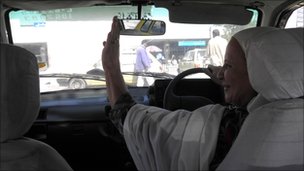
Zahida Kazmi: Pakistan's ground-breaking female cabbie

The roads in the northern areas of Pakistan can be perilous
Zahida Kazmi has been hailed as Pakistan's first female taxi driver. She has driven from the crowded markets of Islamabad to the remote tribal country in the north. Here she tells Nosheen Abbas about her two decades in a male-dominated world.
In 1992 at the age of 33, newly widowed Zahida Kazmi decided to take her fate in her own hands and become a taxi driver.
Born into a conservative and patriarchal Pakistani family, she flew in the face of her family's wishes but with six children to support, she felt she had no choice.
She took advantage of a government scheme in which anybody could buy a brand new taxi in affordable instalments. She bought herself a yellow cab and drove to Islamabad airport every morning to pick up passengers.
In a perilous and unpredictable world, Zahida at first kept a gun in the car for her own protection and she even started off by driving her passengers around wearing a burqa, a garment that covers the entire body.
Her initial fears soon dissipated.
"I realised that I would scare passengers away," she said. "So then I only wore a hijab [head covering]. Eventually I stopped covering my head because I got older and was well-established by then."
Exposing herself to the hot, bustling city streets of Islamabad and by driving to the rocky and remote districts adjoining Pakistan's tribal areas, Zahida says she learned a lot about the country she lived in and its people.
The Pathans of the tribal north-west, despite a reputation for fierce male pride and inflexibility, treated her with immense courtesy on her journeys.
Eventually she became the chairperson of Pakistan's yellow cab association. Once she was established, she offered to teach young women how to drive taxis, but there was little interest. Even her daughters didn't express enthusiasm.
Passengers say they feel secure with her
  "They don't need to make a living," she says wistfully. "They are all married."
Zahida is not one of Pakistan's metropolitan liberal middle class - there are plenty of educational and career opportunities for privileged women in Pakistan but not for women from Zahida's background.
Pakistan has an exceptionally low number of women in work: 33.7% according to the Sustainable Development Policy Institute. Most women who work come under the category of "unpaid family workers".
Pakistan's legal system does little to protect women, so harassment is commonplace. Campaigners say it is little wonder that women do not choose livelihoods that make them even more vulnerable.
"Girls shy away from non-traditional jobs in a setting where there is a particular mindset... of intimidation," says Anees Haroon, chairperson of the National Commission on the Status of Women in Pakistan.
'Curious and amazed' But had Zahida been starting out now, things would be quite different as she would be entering the workforce in a country torn between the forces of liberalism and Islamic radicalism.
Pakistan in 1992 was a more moderate place: it was opening up to the world; the dish antenna had been introduced; Pakistan had won the cricket world cup. Zahida says society felt fairly open to her.
But the Taliban presence in many parts of Pakistan has intensified over the years.
The roads in the northern areas of Pakistan can be perilous
  Zahida has had to drive long distances on treacherous routes to northern areas such as Balakot, Chitral, Dir and even the Swat valley.
"Police at checkposts would be interested in why I was driving a taxi, but they were simply curious and amazed," she said.
Passengers seek her out as well. Adnan Waseem, a businessman from Haripur, told me that he always books Zahida for his journeys.
"I saw her and the first thought that came to my mind was that she's my mother's age. I liked her driving and in these days where one feels insecure in Pakistan I felt very relaxed," he said.
Another traveller, Sohail Mazhar, had to be driven through rocky terrain up to the northern city of Abbottabad.
"I am old now and I get tired. It's hard for me to drive all the time but what can I do? ”  Zahida Kazmi
"Even the policemen who stopped us at security checkpoints also knew her... we were so happy to see a woman driving a taxi."
Although Zahida has been feted for being Pakistan's first female taxi-driver, she still has many bitter memories of her struggles as a single mother working hard on the road.
Her own mother disapproved of her career choice and only resentfully accepted it when the media gave her positive coverage.
And she is estranged from her children now.
"I am old now and I get tired. It's hard for me to drive all the time but what can I do? My sons don't help," she said.
"If I had a chance I would have become a doctor."
Just as she said that to me, a passing taxi driver stopped his car and got out to reverentially greet Zahida.
Despite her travails, she is clearly a respected presence on the streets of Islamabad.
From: BBC

Libya: US and EU say Muammar Gaddafi must go

EU leaders were divided over the idea of a no-fly zone

The US and the EU have again called on the Libyan leader Col Muammar Gaddafi to step down.
President Barack Obama said the US would take a wide range of actions to ensure Col Gaddafi surrendered power.
EU leaders meeting in Brussels agreed to "examine all necessary options" to protect the civilian population in Libya.
But they made no mention of imposing a no-fly zone over Libya in their final communique.
British and French leaders had wanted leaders of the European Union's 27 member states to draw up plans to prepare to help the Libyan rebellion, including the possibility of a no-fly zone.
This would prevent pro-Gaddafi troops launching attacks from the air - currently the primary advantage the regime's troops have as they push back the rebel forces.
The rebels had captured many eastern towns in recent weeks in an uprising that followed protests inspired by the revolutions in Egypt and Tunisia.
But many other EU leaders were not keen on the idea of a no-fly zone.
  
President Obama suggested all options were on the table
  German Chancellor Angela Merkel said she was "fundamentally sceptical" about military intervention in Libya in general and about no-fly zones in particular.
The final communique did not mention a no-fly zone, although it also did not rule it out.
"In order to protect the civilian population, member states will examine all necessary options, provided that there is a demonstrable need, a clear legal basis and support from the region," the communique says.
France's President Nicolas Sarkozy said nobody wanted military intervention but "it is clear that Europe is sending a message and did not want to exclude this option".
But this would only happen, he said, with the support of the UN Security Council, the Arab League and the Libyan (rebel) authorities.
There were stronger words in Washington.
President Obama said the world had an obligation to prevent any massacre of civilians in Libya similar to those that took place in Rwanda and Bosnia during the 1990s.
He said that "we are slowly tightening the noose around Gaddafi" and "the bottom line is that I have not taken any options off the table at this point".
'Choke off revenue' Mr Obama said an envoy would be appointed to consult with anti-Gaddafi representatives.
"Let me be as clear as I can about the desired outcome from our perspective, and that is that Gaddafi step down," he told reporters.
"And we're going to continue to work with the international community to try to achieve that and we're going to be in close consultation with these opposition groups, as they get organised, to see how we can bring about that outcome."
EU leaders at the summit expressed political backing for the Libyan National Council, the interim authority set up by rebels in Benghazi, but stopped short of the diplomatic recognition given to the council on Thursday by France, a move which divided the bloc.
But leaders were more united over who they did not want in power, as summed up by European Commission President Jose Manuel Barroso.
"The problem has a name: Gaddafi. He must go," said Mr Barroso. "We have to intensify our international pressure on the current regime to step down."
The British Prime Minister David Cameron urged his EU partners to step up sanctions and choke off the revenue Col Gaddafi's regime gets from oil exports.
European Council President Herman Van Rompuy said leaders hoped to hold a joint summit soon with the Arab League and the African Union.
The Arab League is meeting to discuss the Libyan crisis on Saturday. The African Union has already rejected any idea of foreign military intervention in Libya.
Military momentum The increased diplomatic push came as forces loyal to Col Gaddafi continued to make gains.
 
At the scene
We've been trying to come here to the town of Zawiya for days now and finally we've been allowed.
As much as they've tried to cover up the devastation with the green flags of the Gaddafi regime and bring in lots of pro-government supporters, they can't hide the fact that there has been a huge battle in this town.
This is a scene of complete devastation. Virtually every building around the square has either been flattened or damaged by heavy gunfire, by heavy artillery fire
The main mosque in front of me is absolutely destroyed, the minaret is in pieces. The buildings just to the side of the minaret are also totally destroyed.
The government forces may have finally won this place back from the rebels but we understand it has come at a very human cost and it has also virtually destroyed the town itself.
There have been more airstrikes on the oil port of Ras Lanuf, with an oil refinery and a rebel checkpoint among the targets. Rebels had earlier reported government forces entering the city by boat and in tanks.
The town has been held by anti-Gaddafi forces for several days and rebels still reportedly control the inner city and residential areas.
Col Gaddafi's regime took a number of Western journalists to Zawiya on Friday for the first time since it was recaptured from the rebels.
The city, 30 miles (48km) west of Tripoli, was shelled for days by government forces and reporters described scenes of devastation and streets that were deserted except for government supporters who had been brought in.
Reuters also reported strikes at Uqaylah and another bombing further east near Brega.
Thousands of people gathered in Benghazi after Friday prayers outside the courthouse, which has become the headquarters of the rebel council.
The BBC's Pascal Harter in the city said vast crowds of people wearing the colours of the old Libyan flag were on the streets.
The head of the council, Mustafa Abdel Jalil, told the BBC the rebels needed not only a no-fly zone but a sea embargo, weapons, and humanitarian assistance for the cities which have been besieged by Col Gaddafi's forces.
In a TV interview on Thursday, Col Gaddafi's son Saif al-Islam warned rebels in Benghazi that government troops were on their way.
In other developments:
  • Gulf Arab states said the Gaddafi regime was illegitimate, and urged that contact be made with the rebels
  • US President Barack Obama's top intelligence adviser James Clapper predicted government forces would defeat the rebels
  • The BBC News website appears to have been blocked by the Libyan authorities
  • The International Committee of the Red Cross said that Libya had now descended into civil war
  • New EU economic sanctions against Libya came into force on Friday, targeting the country's sovereign wealth fund and central bank
BBC

Eat veggies to clear acne and slim down

 
Bitter melon can be used to prepare soup that helps lower internal body temperature and treat acne
A body full of greasy substances can cause the face to get hot and erupt in acne, warns herbalist Hoai Vu. He recommends eating certain vegetables to lower facial temperature and degrease the skin and thereby cure acne, and to lose weight. Here are some of his suggestions:
- Bitter melon soup: Start off by washing and cutting a bitter melon into small pieces, put them in a pot and cover with water. Then cook the diced melon over a high flame until it is soft. Be sure to drink the water as well as eat the melon to lower internal body temperature and treat acne.
- Mixed vegetables: Take a quarter pumpkin, a quarter of a celery cabbage, one cucumber, one carrot, a quarter of a red ginseng root, a pinch of salt and two tablespoons of vinegar. Wash and slice the vegetables and put them in a large bowl, mix in the salt and let stand for six hours, then pour in vinegar and mix well. This dish should be eaten frequently to whiten the face and treat acne.
- Cucumber prevents carbo-hydrates from getting stored as fat, but be sure to eat it fresh as canned cucumber is salty and can make you fatter. A word of warning: Anyone with a liver disorder, cardiovascular disease or stomach ache should not eat cucumbers with salt.
- Waky pumpkin is 98 percent water and contains a little propanoic acid, which reduces fat and slims down the body.
- Potatoes contain glucids, protein, iron, phosphorus and vitamins. It also cools the body more than cereals do. Eating potatoes is a good way to fill the stomach without getting overweight. Indeed, they are the ideal food for the weight-conscious.

Vietnam opposes China’s military exercise on archipelago

Officials from the Ministry of Foreign Affairs met with Chinese embassy staff on Thursday to protest the nation's latest military exercise around the Truong Sa (Spratly) Islands, according to the ministry.

The exercise violate Vietnam’s sovereignty over the islands as well as the terms of the Conduct of Parties in the South China Sea (DOC) signed between China and ASEAN countries in 2002, the ministry said.

China needs to cease complicating established sovereignty, comply with existing treaties, and contribute to the East Sea’s peace, a spokesperson from the Vietnamese ministry said.

According to Chinese Xinhua Agency, China dispatched naval forces to the islands in an anti-piracy exercise on February 24.
Reported by Nguyen Phong- thanhnien.com.vn

Turtle hurdle

Hundreds of residents and tourists watched as people using boatsand nets began
efforts to capture and treat the legendary turtle in Hoan Kiem Lake on March 8
One attempt to capture the ailing turtle in Hanoi’s Hoan Kiem Lake has failed.

But the failure has not disheartened anybody. In fact it has done the opposite. It has given scientists the hope that the turtle, believed to be more than a 100- years-old, has some strength left in it.
 “I would not call it a failure because it may take several tries. It’s hard to catch a large, very large soft-shell turtle,” said Douglas Hendrie, technical advisor of Education for Nature – Vietnam (ENV), a non-governmental conservation organization in Vietnam.
On March 8, thousands of people gathered at the Hoan Kiem Lake as rescuers began efforts to capture the turtle, which is venerated by citizens nationwide, for treatment of apparently severe injuries captured on camera.
The crowd jostled for a place on the shores of the 12-hectare lake to watch divers and rescuers in small boats slowly try to move the turtle with a large net to a nearby islet for treatment.
However, the old animal apparently broke free of the net after a few hours.
Hendrie of ENV, who is an American turtle expert and has lived in Vietnam for 14 years, said that the netting was surely stressful for the turtle. However, he said the escape could be a good sign.
“The turtle does not look good. But I am glad to see how strong it was to escape as it did. This shows that it has some energy left,” he told Thanh Nien Weekly.
Experts have said that the turtle, believed to weigh about 200 kilograms (440 pounds), has been injured by fishhooks, an invasion of red-eared slider turtles, sharp objects thrown into the lake, concrete banks and the polluted habitat.
Many experts believe the turtle belongs to a species called Rafetus swinhoei – of which only four members are believed to be left in the world. One lives in Dong Mo Lake in the west of Hanoi, while two others are being raised in captivity in China.
Due to its feisty nature and the legendary status it enjoys, the Hoan Kiem turtle has never been taken ashore to measure it or verify its species, gender and age. Local scientist Ha Dinh Duc has steadfastly claimed that the Hoan Kiem turtle is the only member of a new species that he calls Rafetus leloii.
Hendrie said he hoped the injuries seen on the giant soft-shell turtle would not be as serious as it appeared on captured images.
“Let’s hope that when they get it out and see the wounds, they are not as serious as they look on camera. If its condition is deemed life threatening, then treatment is the only course of action, but otherwise, authorities might simply choose to put it back,” he said.
On February 9, a commission set up by Hanoi authorities to capture the turtle assigned a local trading company – KAT Group, which runs an eco-farm with turtles in Hanoi – to prepare a new net. The company’s director, Nguyen Ngoc Khoi, has said that the net would be larger than the previous one prepared by the municipal Department of Agriculture and Rural Development, and would be ready in a week.
Timothy McCormack, a coordinator with the Cleveland Metropark Zoo’s Asian Turtle Program, is also optimistic about the rescue work undertaken with a stronger net.
“With such a large turtle as this it is never going to be easy to capture in a 12-ha lake, these animals are powerful and quick in the water. The teams yesterday worked hard and almost had the turtle to the shore when it escaped. If the team has a stronger net they could try again, they were very close,” he said.
He advised the use of trap systems, instead of a simple net, to direct the turtle into an area with a drift fence, such as a pound net. 
Rescuing the lake
While trying to capture the turtle, Hanoi authorities are also rushing to clean up the lake that has been severely polluted for decades.
The dredging of the lake began on February 28 and is expected to be completed by March 20. By March 2, up to 4.5 million liters of clean water was supplied to the lake from the Yen Phu Water Supply Station.
Water plants will be put in the lake by March 10 to reduce pollution. Authorities will also inspect restaurants on the lake’s banks that have been accused of discharging untreated wastewater into the lake.
Ha Dinh Duc said he has called for efforts to reduce pollution in the Hoan Kiem Lake for many years, but nothing has been done.
Peter Werner of Germany´s Dresden University of Technology said that it would be difficult to maintain a balance of the lake’s ecosystem because it is very complex and unique.
“For sure pollution with concrete, trash of any kind, plastic bags and others has to be avoided,” he said, adding that activities like littering could kill the turtle. “One of the worst things which could happen will be that the head of the turtle is covered by a plastic bag and it will asphyxiate.”
However, Werner said he was more concerned about the water quality in the lake due to a high load of organic substances.
“It mainly originates from leaking wastewater pipe systems around the lake. This discharge of sewage leads to an eutrophication of the lake with the consequence of algae blooming. Algae blooming means that the concentration of the dissolved oxygen is very high during day time and very low (close to zero) during night time.
“This impact is a stress factor for all animals living in the lake. And in extreme situations it can lead to fish dying. Moreover there are toxic algae in the lake, which bloom from time to time. The toxins produced also are the reason for fish dying, as happened two years ago in summer,” he said.
Ha Thi Hong Thai, employee of a construction materials trading company in Hanoi, said that rescuing the sacred turtle has become the topic of many conversations in the capital city these days.
Like many locals, she considers the animal a deity.
“It is said that many people have been killed in accidents nationwide since Tet when the turtle was not healthy.” Thai said that among the deaths was that of her brother-in-law – a tour guide who was killed together with 11 others in the Ha Long Bay boat accident in Quang Ninh Province on February 17.
“I hope cu rua (great grandfather turtle) will live long after receiving medical treatment.”
Reported by An Dien - Minh Hung
More detail: Turtles in the Hoan Kiem Lake were traditionally viewed as manifestations of the Golden Turtle God, or Kim Qui. Over the last two millennia, the deity is said to have helped design fortifications, thwart enemy armies and produce a number of enchanted weapons. It is said that in the 15th century, the turtle handed Emporer Le Loi a magic sword which he used to repel a Chinese invasion. After his victory, Le Loi returned the weapon to Kim Qui who dove back into the lake with the blade clutched in his beak.
Hoan Kiem literally translates as the “Lake of the Returned Sword.”