Showing posts with label Vietnam. Show all posts

Thursday, July 25, 2013

Vietnam ethanol plant to be merged with oil refinery to cut costs

The Dung Quat Bio-Ethanol plant in the central province of Quang Ngai
Vietnam’s only remaining ethanol plant will be merged with the oil refinery at Dung Quat as a cost-cutting measure at a time of low demand.
BSR, a PetroVietnam subsidiary that owns the Dung Quat oil refinery, and Petrosetco, another subsidiary that owns the Dung Quat Bio-Ethanol, are wrapping up procedures for the merger.
The ethanol plant, which has a capacity of 330 tons per day, has been on a trial run since the start of last year.
The US$80-million plant, while awaiting the country’s switch to biofuels by 2015, has been exporting most of its output. 
News website VnExpress quoted BSR chairman Nguyen Hoai Giang as saying the company plans to produce E3 fuel, a blend of 3 percent ethanol and 97 percent gasoline, for use in the local Quang Ngai Province this year, and E5 for the whole central region a year later.
The cost of producing ethanol is around VND15,000 per liter while the export price is VND13,000.
Low domestic demand and the losses on exports caused the country's two other producers – Binh Phuoc Ethanol and Dai Tan Ethanol -- to temporarily close down and others to stop construction.
Biofuels remain unfamiliar to most people while their prices are nearly high as that of 92-RON, the most popular gasoline variety grade in the country.
The government plans to make the use of biofuels obligatory in seven cities by 2015.
The country, which produces 30 percent of the gasoline needed for domestic consumption, is expected to less rely on imports once it switches to domestically-made ethanol.
Vehicles using ethanol emit less pollutants than normal.
Source: thanhniennews.com

Let the online buyer beware


Vietnamese law struggles to keep pace with the boom in online shopping
A man browses for cell phones online. The rapid development of Vietnam’s e-commerce industry has led an increase in fraud, while a new government decree lacks punitive measures. Photo: Diep Duc Minh

Tran Minh Tan was delighted to find a used Sony Vaio laptop for just VND5 million (US$236) online.
The computer technician from Ho Chi Minh City’s Go Vap District transferred money to the seller’s account and was promised he would receive the computer within two days.
“It wasn’t until the fourth day that I realized I’d been cheated,” he said, adding that he found the laptop on a popular IT site.
Similar instances of fraud are becoming more commonplace in Vietnam, where the increase of Internet users has resulted in booming online consumerism, the management of which has been lax.
Vuong Ngoc Tuan of the Vietnam Standards and Consumers Association (Vinastas) said his agency has received an increase in complaints from online consumers over the past year.
Among them, Vo Thi Anh Hong said she ordered 15 pairs of contact lenses from the VickyDinh Company in Hanoi and transferred money into the account of Nguyen Thi Hoa, per instructions provided by the company’s site.
When Vinastas later made inquires to VickyDinh, the company responded by saying it had no record of any transactions involving Hong and that it has no knowledge of Hoa.
In another case, Nguyen Xuan Hiep of Bac Ninh Province bought a Lancaster watch from the BrandsFavor online store that arrived with scratches.
After repeated complaints, the online shop agreed to refund half of the money Hiep paid without providing further explanation.
Tuan said common e-commerce problems include the unclear origin of products, fake products, and those which arrive without receipts or which differ from how they were advertised.
“This enables sellers to easily evade responsibility after delivering products,” he said.
Tuan said the increased number complaints simply reflect the increase in online shopping.
According to the Vietnam Internet Network Information Center, the country had more than 31.3 million Internet users by the end of 2012, a significant segment of the country’s population of around 90 million.
A report by the Vietnam E-commerce and Information Technology Agency under the Ministry of Industry and Trade shows e-commerce revenues last year totaled VND7 trillion ($354 million), excluding those of unregistered online stores.
The agency estimated that Vietnam’s e-commerce revenues is on pace to reach $1.3 billion by 2015.
A report by the Ministry of Information and Communications found the proportion of local residents who buy goods online had risen by nearly 14 percentage points, up to 79.2 percent in 2012.
The proportion of residents to make payments online or use online banking were 57.3 percent last year, a threefold increase from 2011 and 11 times higher than 2010.
Risks well-publicized
Although Vietnam does not keep official statistics on the number of consumers victimized by e-commerce fraud, many cases have been reported widely by the local media of late.
Last month, police in Lao Cai arrested Nguyen Thuy Hien of the Muaban24 Online Trade and Training Company (MB24). She was just the latest MB24 employee to be arrested since last August. The firm is being investigated for fraud alleged to have cheated customers out of a total of more than VND700 billion ($32.92 million).
Police said while working for MB24 from July 2011 to September 2012, Hien worked her way up to become deputy director of the firm’s Lao Cai branch. During this time, she allegedly swindled more than VND2 billion from local consumers, transferring VND1.6 billion to the company and pocketing the rest.
Since being founded in August 2011, MB24 has been accused of persuading thousands of people, including farmers, students and teachers, into buying shops on the company’s online store. By the time the Lao Cai branch closed, it had sold 8,274 shops for approximately VND43 billion ($2 million), police said.
According to police findings, MB24 defrauded people by offering them online shops for VND5.2 million ($245.43), promising the opportunity to buy and sell goods at cheap prices.
But while people paid real money to the company, they received credit vouchers in return. Although they were told initially that the virtual money could be exchanged into cash, when shop owners attempted to cash in their credit, they were told to sell their credits to other shop owners.
In another case, customers who purchased coupons from the Nhom Mua Company were left high and dry after it shut down without warning late last year.
Many suppliers have refused its coupons, saying Nhom Mua still owes them money. The company resumed operations soon afterward.
Incomplete decree
In response to the burgeoning e-commerce crisis, the government issued a decree that took effect on July 1, but which has been criticized for its lack of comprehensiveness and punitive measures.
At a recent conference on implementing the decree, Nguyen Huu Linh, director of the Vietnam E-commerce and Information Technology Agency, admitted that it does not cover all e-commerce activities, only the most common issues.
The decree bans multilevel marketing, the sale of fake and illegal products, swindling; and the hacking and sale of consumers’ confidential information.
Websites selling coupons must give customers refunds if their coupons are rejected by relevant retailers.
According to the decree, the Ministry of Industry and Trade is responsible for publishing a list of online trading websites that violate the decree, as well as those that receive complaints.
Nguyen Van Tuan, e-commerce director of the Vietnam Communications Corporation, said the decree only covers half the problems the industry currently faces.
“There are no penalties and insufficient regulations regarding payment systems,” VOV news website quoted him as saying.
“For example, it is still difficult to calculate the actual value of many online deals,” he said, adding that his company has six years experience in the field and found several problems.
He also said it is wrong for the decree to stipulate that online firms merely accused of wrongdoing be publicized.
Deputy minister of Industry and Trade Tran Tuan Anh said the government will amend the decree after it is implemented, explaining that Vietnam’s e-commerce industry still lags behind those of the region and the world.
“The ministry is drafting penalties against e-commerce fraud that are expected to be approved by the year’s end.”
source: thanhnienews.com

Friday, May 03, 2013

Truth and lies about Spratly, Paracel

By Dr. Nguyen Nha. Nha’s Phd dissertation’s title is “The process of asserting sovereignty of Vietnam over Hoang Sa and Truong Sa”. He is the first Vietnamese to earn a Phd on this topic.
Vietnamese navy officers looking at maps proving
Vietnam's sovereignty over Hoang Sa at a museum in Da Nang on April 29
East Sea issues are escalating in intensity, worrying international scholars at many East Sea conferences who fear a tragedy could occur in Asia, like one that happened to Europe in World War II.
The world nowadays does not know or deliberately refuses to know that it is the sovereignty dispute over islands wherein involved parties or party pay(s) no heed to historical truths and to international law that causes intensity to escalate.
During a recent international conference in Quang Ngai, one scholar from a university in Hong Kong said that historical facts about Vietnamese sovereignty are propagandized in a very limited manner to the world. I have recently demanded for more heed to the historical truth about sovereignty over Paracel (Hoang Sa) and Spratly (Truong Sa).
The “ownerless land” declaration
Let’s pay attention to what actually happened in 1909. In that year, China started to claim sovereignty in the East Sea. The Guangdong  government reasoned that Paracel was an “ownerless land” and started to carry out its occupation via western means like ordering a warship to fire 21 shots, flag planting, erecting border lines in Paracel and renaming it Xisha.
Or let’s focus on the event in 1898 when a British insurance company demanded compensation from the Hainan government for the looting by Hainan residents of the Bellona ship (Germany) that sank in 1895 and of the Unofi Maru ship (Japan) that sank in 1896 in Paracel. The Hainan government then denied that Paracel belonged to China.
Vietnam has so much evidence to prove that Paracel belongs to Vietnam, from imperial court documents of the Nguyen dynasty, local government papers, court historical archives, monographs, and maps to Western documents, and maps drawn by the West and even documents and maps published in China.
Western documents like Gutzlaff (1849) or the Great Annam Map clearly wrote that Paracel is Yellow Sands or Hoang Sa.
Vietnam possesses the sovereignty truth on a continuous and peaceful basis through many eras with the Hoang Sa militia, the Bac Hai team travelling to Hoang Sa and Truong Sa for fish and for cast-away products as far back as the early 17th century, or with the navy planting landmarks, and erecting sovereignty steles from 1816-1836. Such activities have become an annual routine.
As China once announced Paracel was ownerless and did not belong to China, all other evidence surfaced thereafter was just fabrications or far-fetched deductions that are valueless and go against the historical truth.
The uncut history
In April, 1956, taking advantage of the French army withdrawing from Indochina, Taiwan occupied the largest island -- Itu Aba, i.e Ba Binh island, of Truong Sa (China renamed it Taiping Island to commemorate the Taiping warship that occupied it at the end of 1946); China occupied the largest island of Hoang Sa archipelago and taking advantage of new relations with the US after the Shanghai Communiqué (1972), occupied the whole Hoang Sa archipelago on January, 19, 1974.
From that time on (compared to the years before 1949), China started to pay more attention to the claim that China has exercised sovereignty over Hoang Sa for a long time with ample ahistorical evidence. China has been trying to collect, selectively use and manipulate data and if necessary, distort information, being helped by a number of scholars who reason on the premise that “islands in the South China Sea from time immemorial are part of China’s territory”, “they were discovered by the Chinese people the earliest”, “the Chinese carried out businesses there earliest”, or “managed by Chinese dynasties the earliest”. (Guangming Daily, November, 24, 1975).
After that, on January 30, 1980, the Ministry of Foreign Affairs of the People's Republic of China released diplomatic documents that officialized claims as set out in the aforementioned newspaper article and in 1988, released a sizable compilation penned by Han Zhenhua and his associates.
But the information therein is very vague and not verified while most of the ancient documents that China cited are books written about foreign countries (Zhu Fan i.e the books did not discuss Chinese matters) such as Yi Wu Zhi (Exotic things) by Yang Fu and Zhu Fan Zhi (Notes on foreign countries) by Zhao Juguo.
As there is no truth in such rhetoric, with maps drawn by China and the West telling a different story, and since the Guangdong government once asserted Paracel ownerless, it is very easy to deny such claims, especially considering the international legal system at the end of the 19th century under which sovereignty was established only on the basis of effective, continuous and peaceful occupation on the state level.
If we want to invalidate China’s nine-dotted line declaration in 2009, it is also easy. Just rely on the United Nations Convention on Law of the Sea – UNCLOS 1982, especially when China used hazy and unacceptable data.
Nowadays, most people in China brush aside the 1909 event when Guangdong government declared Paracel an “ownerless land”. Almost everyone there presumes something like “islands in the South China Sea from time immemorial belong to China; if we further consult ancient Chinese texts, this is apparent, nothing to suspect”… Such presumptions are widely propagandized among Chinese people. But the truth is that if we consult ancient texts, there will be nothing, just wild inferences.
To avoid a tragedy in Asia as many have feared, and for the sake of justice, stability, peace, and sustainable cooperation, there is no way but to respect the historical truth, respect international law; and struggle for a win-win solution. Render unto Caesar the things which are Caesar's.

Source tuoitrenews.vn

Thursday, May 02, 2013

Smoking kills 100 people in Vietnam every day

Smoking-related diseases kill over 40,000 people in Vietnam each year and if no measure is taken, nearly 10 percent of the Vietnamese population will have died from smoking-related diseases by 2030, the Ho Chi Minh City Health Education and Communication Center warned.
A young man smokes at a café in Vietnam
The warning, based on the estimates of the World Health Organization (WHO), was released by the Ho Chi Minh City Health Education and Communication Center to mark the date the Law on Prevention and Control of Tobacco Harms took effect - May 1.

Smoking is one the leading causes of death in Vietnam, with more than 100 people dead from tobacco-related diseases per day, four times higher than the death toll of road traffic accidents.

Vietnam is among the countries having the highest rates of male tobacco smokers in the world, and is also one of the countries where smoking in public places are popular, affecting the health of non-smokers who are exposed to second-hand smokes, according to WHO.

According to the 2010 global adult tobacco survey, out of two Vietnamese people over 15 years old, one is addicted to tobacco.

Smoking-related fatal diseases like stroke, coronary artery, lung cancer are the leading causes of death for both men and women in Vietnam.

Vietnam, with a population of nearly 89 million now, is one of the 15 countries having the highest rates of tobacco users in the world, particularly men, said Deputy Minister of Health Nguyen Thi Xuyen at a conference on April 23.

About 11 percent of male deaths have been caused by smoking, according to a survey by the Health Strategy and Policy Institute.

WHO warns that the number of deaths would rise to 70,000 cases in 2030 if there are no effective measures in response to smoking in Vietnam.

47 million second-hand smokers at home in Vietnam

In Vietnam, according to the above-mentioned global adult tobacco survey, about 8 million workers suffer from passive smoking at working places, and as many as 47 million people are regularly exposed to smoking at home.

Tobacco kills nearly six million people in the world each year, of whom more than 5 million are users and ex users and more than 600,000 are nonsmokers exposed to second-hand smoke, according to WHO.

Unless urgent action is taken, the annual death toll could rise to more than ten million by 2030, and 70 percent of which will be in developing countries, WHO said.

In adults, second-hand smoke causes serious cardiovascular and respiratory diseases, including coronary heart disease and lung cancer. In infants, it causes sudden death. In pregnant women, it causes low birth weight.
A cigarette shortens life span by 5.5 minutes

Meanwhile, scientists warn that smoking a cigarette causes a loss of 5.5 minutes of life expectancy. The average life span of smokers is 5-8 years shorter than non-smokers.

In women, smoking may cause infertility, premature menopause, ectopic pregnancy, pre-birth fetal death, miscarriage, and cervix cancer. Smoking when in pregnancy may lead to underweight of newborns, premature birth, and after-birth hemorrhage.

In men, smoking may increase their risk of impotence by twice, reduce the ability to produce sperms, cause deformity of sperms, and decrease the ability of sperm movement.

Source tuoitrenews.vn

Thursday, April 18, 2013

Rumor of ‘ninja robbers/rapists’ worries residents

V.T.N, a local in a residential quarter in Long Hai Town, had to have 11 stitches on the wounds on her right hand after being sexually attacked by a man on April 11
Locals in a district in Ba Ria-Vung Tau province are worried about a rumor that a robbery gang can break into houses from the roof to rob residents and rape women.

The information has been provided to Tuoi Tre by residents of Long Hai town in Long Dien district, who said they and other locals were very anxious about their safety, although police rejected the rumor.

On April 17, Tuoi Tre reporters arrived in Long Hai and Duong Van Chia, a local, said many families were very anxious about the risk of being attacked by a robbery gang.

“The rumor says these robbers are so tactical that they can ‘make themselves invisible' when they move from one rooftop to another without being detected,” Chia said.

Since April 10, locals have set up watch teams to guard and detect any suspicious strangers trying to enter their residential quarters.

Hoang Thi Dung, head of a residential quarter, said that on the night of April 13, watchmen saw some people moving on the rooftops but could not track them down.

Tran Van Vinh, a local, said he heard loud noises coming from his roof and the roof, tiled with metal roofing sheets, later sank a bit.

Two days later, local guards found a stranger entering their residential area and seized him. The man, who said he is a native of Quang Binh province and homeless, was handed over to police, who later sent the man to a social center.

There have been no robbers or thieves arrested so far.

Rape?

It seems that the rumor is based on real cases that have recently occurred to two local women, many residents said.

The first case is of V.T.N., a woman who reported she had attacked by a robber at 2 am on April 11.

N. said that a man used a knife to threaten her when she found him breaking into her house. The men used a pair of scissors to cut her net-mosquito and said, “Keep silent or I will kill you!”

The man then asked where she kept her money and after she said she had no money, he covered her face with a blanket and searched the house for money.

After failing to find money, he forced N. to use her hands to stimulate his penis. N. then managed to grasp the pair of scissors and tried to get away from the man while shouting loudly for help.

The man ran away with the scissors, while N. suffered many cuts on her hands. She later had to have 11 stitches on the wounds.

The second case happened to C.T.N., who lost a mobile phone and VND60,000 (US$2.8) to a robber who threatened and launched a sexual attack on her before she managed to escape from him early on the morning of April 9.

Local authorities have calmed down residents and advised them not to be excessively worried by rumors while awaiting investigation and conclusions by police, said Nguyen Van Son, chairman of the town People’s Committee.

Police will boost their patrols in many areas in the town, Son added.
source tuoitrenews.vn

Tuesday, April 16, 2013

Kịch bản dối lừa trong vụ 'nho Big C gắn cờ Trung Quốc'


Thiên Minh - Hoàng Thắng (Petrotimes) - Ngày 15/4, bà Nguyễn Thị Như Mai – Trưởng Chi cục quản lý thị trường (QLTT) Hà Nội đã thông báo kết quả xử lý vụ "nho Big C gắn cờ Trung Quốc". Tuy nhiên, kết quả này đã nhanh chóng vấp phải sự phản ứng mạnh mẽ từ dư luận. Và một kịch bản dối lừa đã được phanh phui.
Đảo chiều: Nho Big C có nguồn gốc từ chợ Long Biên 
Ngày 15/4 Chi cục QLTT Hà Nội đã cung cấp thông tin cho rằng nho xanh bán tại Big C có dán cờ Trung Quốc có xuất xứ từ Ninh Thuận. Tuy nhiên, "tình tiết lạ" đã xuất hiện: Nhà cung cấp nho cho Big C được "đá" ra mãi chợ Long Biên chứ không phải là công ty Minh Quang như Big C tuyên bố lúc đầu. 
Theo đó, ngày 15/3, một khách hàng đến siêu thị Big C The Garden mua nho và phát hiện những khay nho xanh bày bán tại siêu thị có dán cờ Trung Quốc nhưng tem nhãn lại ghi "nho xanh Việt Nam". Big C tuyên bố đây là nho do công ty Minh Quang cung cấp. 

 Trong lần làm việc với PV Petrotimes, bà Bùi Thị Dung, Giám đốc Công ty Minh Quang cũng khẳng định: Nho xanh bán ở Big C là do công ty của bà cung cấp. Chúng tôi đưa ra một khay nho vừa mua ở Big C, bà Dung nhận ngay là nho của công ty mình. 
Cả Big C và Minh Quang đều khẳng định nho gắn cờ Trung Quốc là của Minh Quang cung cấp nhưng sau hơn 1 tháng "điều tra", số nho này lại được "đá" ra mãi chợ Long Biên. 
Một kịch bản hợp thức hóa tài tình được công bố chiều 15/4 như sau: 
1. Sau nhiều lần làm việc, công ty Minh Quang nhận là: Từ ngày 22/3 mới cung cấp nho cho Big C còn lô sản phẩm nho trước đó không liên quan. Vậy nên nho mà khách hàng bắt gặp trong Big C không phải là nho của Minh Quang. 
Vừa nhìn thấy khay nho, bà Dung đã
khẳng định đó là nho của mình cung cấp
 Mặc dù, trong buổi trả lời PV Petrotimes sáng 26/3, Bùi Thị Dung - giám đốc công ty Minh Quang khẳng định: "Mỗi ngày công ty Minh Quang cung cấp khoảng 50-70 kg nho xanh cho hai siêu thị là Big C The Garden và Big C Thăng Long. Tất cả số nho được đóng vào hộp nhựa lớn 10kg. Việc đóng gói và dán tem mác lên sản phẩm là do phía siêu thị đảm nhận." 
Theo lời bà Dung, công ty Minh Quang ký hợp đồng cung cấp hoa quả cho Big C từ nhiều năm nay và đây là lần đầu tiên sản phẩm do công ty Quang Minh cung cấp gặp sự cố. 
Bà Dung cũng khá thật thà thổ lộ: Không biết địa chỉ, số điện thoại hay liên hệ của người bà con ở cung cấp nho ở Ninh Thuận... 
2. Big C The Garden lên tiếng thừa nhận do sơ suất trong công tác quản lý giấy tờ nên nhầm lẫn và cho biết số nho gắn cờ Trung Quốc không phải mua của Minh Quang mà là từ... chợ Long Biên. 
Cụ thể là mua của bà Phạm Thị Hảo ở kiot 83 – 84 chợ Long Biên. Bà Hảo có hóa đơn chứng từ cấp cho Big C và khai nhận mua lại nho của bà Cao Thị Vượng - một hộ kinh doanh tại cổng chợ Long Biên. Bà Vượng nhận là mua nho từ Ninh Thuận. 
3. Đội quản lý thị trường số 3 làm việc với Ban quản lý chợ Long Biên và cho rằng bà Nguyễn Thị Ánh Thịnh, Phó ban quản lý chợ khẳng định trong tháng 3, chợ Long Biên không có nho xanh Trung Quốc; nho Trung Quốc chỉ có ở chợ Long Biên vào tháng 6 và 7. 
Thế nhưng, trong ngày 26/3, phóng viên Petrotimes đã ra chợ Long Biên, mua được nho Trung Quốc (tiểu thương thừa nhận nhập từ cửa khẩu Cốc Lếu, Lào Cai) để về so sánh. Độc giả có thể xem bức ảnh dưới đây (Ảnh đã được đăng trong bài viết "Có một 'trung gian ảo' vụ 'nho Việt Nam gắn cờ Trung Quốc?" vào ngày 26/3). 
Nho xanh Trung Quốc (bên phải) nhập từ cửa khẩu Lào Cai 
mà phóng viên Petrotimes mua tại chợ Long Biên vào ngày 26/3. 
Thế mà có người hồn nhiên tuyên bố là tháng 3 không có nho xanh Trung Quốc ở chợ Long Biên! 
4. Big C cũng nhanh chóng kiếm được một văn bản xác nhận từ Chủ tịch Hiệp hội nho Ninh Thuận cho rằng trong tháng 3 có một số lượng nho Ninh Thuận được đưa ra thị trường phía Bắc tiêu thụ. 
Tuy nhiên, trước đó, ông Nguyễn Văn Mọi - Phó chủ tịch Hiệp hội nho Ninh Thuận tuyên bố chắc chắn rằng: Nho Ninh Thuận chỉ cung cấp cho địa chỉ duy nhất ở quận Hai Bà Trưng, Hà Nội. Ông Mọi thậm chí còn cử chuyên gia Trần Mạnh Chiến đi xác minh. Kết quả là ông Chiến bị nhà cung cấp Minh Quang "tránh mặt". 
Một số nguồn tin riêng của Petrotimes cho biết, trong những ngày xảy ra sự cố, nhân viên của Minh Quang chạy như con thoi ra vào Ninh Thuận. Đúng như dự đoán của ông Trần Mạnh Chiến "Đợt này nho Ninh Thuận đang vào mùa, sản lượng lớn nên nếu các đơn vị ngoài Hà Nội vào đặt vấn đề mua nho. Đồng thời họ có thể xin thêm giấy tờ hợp thức hóa việc mua bán từ trước tới nay. Nếu họ giở trò này thì mọi hoài nghi coi như đi vào ngõ cụt" 
Và trên thực tế, đã có 1 văn bản được thu xếp ra đời, mặc dù nó cũng khá mù mờ, không khẳng định được nho ở Big C là nho Ninh Thuận nhưng cũng đủ làm cho dư luận hiểu sang một hướng khác. 
5. Big C im lặng để "câu giờ", có đủ thời gian hợp thức hóa.
Lúc đầu Big C tuyên bố hùng hồn: “Đây là nho xanh được trồng ở vùng Ninh Thuận, do doanh nghiệp Minh Quang có trụ sở ở Đan Phượng cung cấp và đầy đủ giấy tờ theo quy định. Việc xuất hiện cờ Trung Quốc trên nho chỉ là nhầm lẫn trong khâu đóng gói sản phẩm”. 
Đến khi không thể trốn tránh mãi trước những bằng chứng do Petrotimes phanh phui, Big C lại phủ nhận tuyên bố này và "đổ thẳng" ra chợ Long Biên. Một động thái hợp thức hóa tài tình và bất ngờ với tất cả. 
Cuối cùng là một kết luận làm an lòng dư luận được đưa ra: 
Siêu thị Big C thừa nhận dùng cờ các nước dán vào sản phẩm là vi phạm khoản 7 điều 30, Nghị định 75 về quy định xử phạt hành chính trong lĩnh vực văn hóa trong đó có nội dung quảng cáo tại Luật Quảng cáo. Với lỗi này, lực lượng quản lý thị trường xử phạt Big C The Garden 35 triệu đồng. Trong quá trình kiểm tra, lực lượng chức năng phát hiện một số sản phẩm nho có in nhãn hàng hóa không rõ ràng. 
Vụ việc được hợp thức hóa đúng như dự đoán của ông Trần Mạnh Chiến và phóng viên Petrotimes. 
Vậy là nghi án "gian thương", "gián điệp" trong vụ dán cờ Trung Quốc lên nho Việt Nam của Big C đã chuyển hóa một cách tài tình như vậy. 


Công nhận VNCH vì biển đảo ngày nay?


Dương Danh Huy và cộng sự
Quỹ Nghiên cứu Biển Đông


Những định nghĩa pháp lý cho các chính thể Việt trong cuộc chiến chấm dứt ngày 30/4/1975 có vai trò quan trọng cho lập luận của Việt Nam về chủ quyền trên hai quần đảo Hoàng Sa và Trường Sa.
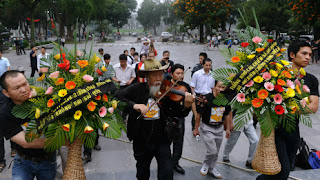
Tưởng niệm các quân nhân Việt Nam từ cả
hai phía hy sinh ở Hoàng Sa - Trường Sa
Sự quan trọng này không chỉ vì công hàm 1958 của Thủ tướng Việt Nam Dân Chủ Cộng Hòa (VNDCCH) Phạm Văn Đồng, mà còn vì Hà Nội đã không khẳng định chủ quyền đối với Hoàng Sa, Trường Sa từ năm 1954 đến 1975-1976.

Quốc gia duy trì chủ quyền


Trong phán quyết năm 2008 về tranh chấp cụm đảo Pedra Branca giữa Malaysia và Singapore, Tòa án Công lý Quốc tế cho rằng ban đầu Malaysia có chủ quyền đối với đảo Pedra Branca.
Tòa nói công hàm 1953 của Johor, nay là một tiểu bang của Malaysia, trả lời Singapore rằng Johor không đòi chủ quyền trên đảo này, không có hệ quả pháp lý mang tính quyết định và không có tính chất ràng buộc cho Johor.
Nhưng Tòa lại dựa vào việc trước và sau đó Johor và Malaysia không khẳng định chủ quyền và dùng công hàm 1953 của Johor như một trong những chứng cớ quan trọng cho việc Malaysia không đòi chủ quyền, để kết luận rằng tới năm 1980 chủ quyền đã rơi vào tay Singapore.
Bài học cho Việt Nam là: bất kể ban đầu Hoàng Sa, Trường Sa là của Việt Nam, và dù cho chúng ta có biện luận thành công rằng công hàm của Thủ tướng VNDCCH Phạm Văn Đồng không có tính ràng buộc về hai quần đảo này đi nữa, việc VNDCCH không khẳng định chủ quyền trong hơn 20 năm, trong khi các quốc gia khác làm điều đó, có khả năng sẽ làm cho VNDCCH không còn cơ sở để đòi chủ quyền nữa.
Vì vậy, trong lập luận pháp lý của Việt Nam phải có sự khẳng định chủ quyền đối với hai quần đảo này từ một chính phủ khác, lúc đó là đại diện hợp pháp cho một quốc gia Việt nào đó.
Trên lý thuyết, nếu chứng minh được từ năm 1954 đến 1975 chỉ có một quốc gia, và chính phủ Việt Nam Cộng Hòa (VNCH) là đại diện hợp pháp duy nhất của quốc gia đó, thì điều đó cũng đủ là cơ sở cho lập luận pháp lý của Việt Nam về Hoàng Sa, Trường Sa.
Trên thực tế, thứ nhất, chưa chắc chúng ta sẽ chứng minh được điều đó; thứ nhì, chính phủ Việt Nam ngày nay sẽ khó chấp nhận một chiến lược pháp lý dựa trên giả thuyết này.
Vì vậy, chiến lược khả thi hơn cho lập luận pháp lý của Việt Nam cần dựa trên điểm then chốt là từ năm 1958 đến 1976 có hai quốc gia khác nhau trên đất nước Việt Nam.
Phân tích này sử dụng ba khái niệm sau.
Đất nước, là một khái niệm địa lý, bao gồm một vùng lãnh thổ với dân cư. Chính phủ, là cơ quan hành pháp và đại diện. Quốc gia (trong bài này từ “quốc gia” được dùng với nghĩa State/État), là một chủ thể chính trị và pháp lý.
Trong Công ước Montevideo 1933, một quốc gia phải có lãnh thổ, dân cư, chính phủ, và khả năng có quan hệ ngoại giao với các quốc gia khác.
Thực chất, trong công pháp quốc tế chỉ có định nghĩa quốc gia như một chủ thể có năng lực pháp lý và năng lực hành vi (tức là có các quyền và nghĩa vụ phát sinh trực tiếp từ luật quốc tế) và chính phủ là thành phần của chủ thể đó, chứ không có khái niệm đất nước.

Một lãnh thổ - hai quốc gia

Hiệp định Genève 1954 chia đôi Việt Nam thành hai vùng tập kết quân sự. Mặc dù không chia Việt Nam thành hai quốc gia, Hiệp định đã tạo ra một ranh giới tại vĩ tuyến 17 giữa hai chính phủ đang tranh giành quyền lực, và ranh giới đó đã tạo điều kiện cho sự hiện hữu của hai quốc gia.
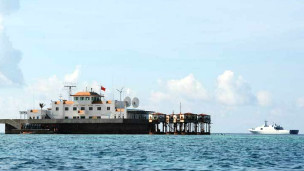
Một cơ sở của Trung Quốc ở quần đảo
 Trường Sa mà họ gọi là Nam Sa
Việc VNCH không chấp nhận thực hiện tổng tuyển cử vào năm 1956 đã làm cho ranh giới đó trở thành vô hạn định.

Sự hiện hữu của hai chính phủ hai bên một ranh giới vô hạn định ngày càng củng cố sự hình thành và hiện hữu trên thực tế của hai quốc gia trên lãnh thổ đó.
Điều có thể gây nghi vấn về sự hiện hữu của hai quốc gia là hiến pháp của VNDCCH và VNCH có vẻ như mâu thuẫn với sự hiện hữu đó.
Tới năm 1956, Hiến Pháp VNDCCH viết “Đất nước Việt Nam là một khối thống nhất Trung Nam Bắc không thể phân chia”, và Hiến Pháp VNCH viết “Ý thức rằng Hiến pháp phải thực hiện nguyện vọng của nhân dân, từ Mũi Cà Mâu đến Ải Nam Quan” và “Việt Nam là một nước Cộng hòa, Độc lập, Thống nhất, lãnh thổ bất khả phân.”
Nhưng sự mâu thuẫn đó không có nghĩa không thể có hai quốc gia.
Hiến pháp của Bắc Triều Tiên viết Cộng Hòa Dân Chủ Nhân Dân Triều Tiên là đại diện cho dân tộc Cao Ly, hiến pháp của Nam Hàn viết lãnh thổ của Đại Hàn Dân Quốc là bán đảo Cao Ly và các hải đảo, nhưng Bắc Triều Tiên và Nam Hàn vẫn là hai quốc gia.
Như vậy, có thể cho rằng từ năm 1956 hay sớm hơn đã có hai quốc gia, trên lãnh thổ Việt Nam, với vĩ tuyến 17 là biên giới trên thực tế giữa hai quốc gia đó.
Việc có hai quốc gia là cơ sở để cho rằng VNCH có thẩm quyền để khẳng định chủ quyền đối với Hoàng Sa, Trường Sa; VNDCCH không có thẩm quyền lãnh thổ gì đối với hai quần đảo đó.
Khi Chính Phủ Cách Mạng Lâm Thời Cộng Hòa Miền Nam Việt Nam (CPCMLT) ra đời ngày 8/6/1969, có thể cho rằng trong quốc gia với tên VNCH, về mặt pháp lý, có hai chính phủ cạnh tranh quyền lực với nhau: chính phủ VNCH và CPCMLT.
Khi VNDCCH công nhận CPCMLT là đại diện hợp pháp cho phía nam vĩ tuyến 17 thì có nghĩa VNDCCH công nhận trên diện pháp lý rằng phía nam vĩ tuyến 17 là một quốc gia khác.
Nhưng tới năm 1969 CPCMLT mới ra đời, và cho tới năm 1974 mới có một tuyên bố chung chung về các nước liên quan cần xem xét vấn đề biên giới lãnh thổ trên tinh thần bình đẳng, vv, và phải giải quyết bằng thương lượng.
Vì vậy, nếu chỉ công nhận CPCMLT thì cũng không đủ cho việc khẳng định chủ quyền đối với Hoàng Sa, Trường Sa từ thập niên 1950.

Quá trình thống nhất

Ngày 30/4/75, VNCH sụp đổ, còn lại duy nhất CPCMLT trong quốc gia phía nam vĩ tuyến 17. CPCMLT đổi tên quốc gia đó thành Cộng Hòa Miền Nam Việt Nam (CHMNVN), nhưng đó chỉ là sự thay đổi chính phủ và đổi tên, không phải là sự ra đời của một quốc gia mới.

Năm 1976, trên diện pháp lý, hai quốc gia trên thống nhất lại thành một, và từ đó Việt Nam lại là một quốc gia với một chính phủ trên một đất nước (lãnh thổ).
Sự thống nhất này đã không bị Liên Hiệp Quốc hay quốc gia nào lên tiếng phản đối.
Năm 1977, Cộng hòa Xã hội Chủ nghĩa Việt Nam được chấp nhận tham gia Liên Hiệp Quốc.
CHXHCNVN kế thừa vai trò của hai quốc gia VNDCCH và VNCH/CHMNVN trong các hiệp định và các tổ chức quốc tế, kế thừa lãnh thổ và thềm lục địa của VNCH/CHMNVN trong các tranh chấp với Campuchia, Thái Lan, Malaysia và Indonesia, và mặc nhiên có quyền kế thừa Hoàng Sa, Trường Sa từ VNCH/CHMNVN.
Lịch sử pháp lý trên nghe có vẻ sách vở, nhưng thực tế của nó là bom đạn, xương máu, và nhiều cảnh huynh đệ tương tàn.
Mặc dù lịch sử pháp lý đó đã kết thúc bằng một quốc gia trên đất nước (lãnh thổ) Việt Nam thống nhất, nó là một cuộc bể dâu làm đổ nhiều xương máu.
Nhưng quá khứ thì không ai thay đổi được, và tương lai thì không ai nên muốn đất nước Việt Nam lại bị chia đôi thành hai quốc gia lần nữa.
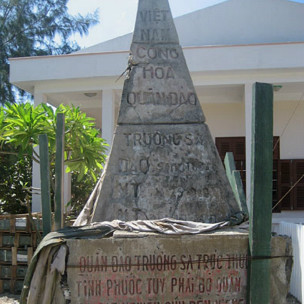
Việt Nam Cộng Hòa từng là một quốc gia
 có chủ quyền với Hoàng Sa và Trường Sa
Cuộc bể dâu đó cũng đã góp phần làm cho Hoàng Sa bị Trung Quốc chiếm đóng, và để lại cho Trung Quốc một lập luận lợi hại, rằng trước 1975 Việt Nam không tuyên bố chủ quyền trên hai quần đảo Hoàng Sa, Trường Sa, và đã công nhận chủ quyền Trung Quốc trên hai quần đảo này.
Nhưng việc đã từng có hai quốc gia trên một đất nước (lãnh thổ) Việt Nam trong giai đoạn 1956 đến 1976, và việc, vào năm 1976, hai quốc gia đó thống nhất thành một một cách hợp pháp, là một yếu tố quan trọng trong lập luận về Hoàng Sa, Trường Sa.
Ngày nay, chính phủ Việt Nam một mặt viện dẫn các tuyên bố và hành động chủ quyền của Việt Nam Cộng Hòa về Hoàng Sa, Trường Sa, nhưng mặt kia vẫn e ngại việc công nhận cụ thể và rộng rãi rằng Việt Nam Cộng Hòa từng là một quốc gia, mặc dù trong quá khứ Hà Nội đã công nhận rằng Cộng hòa miền Nam Việt Nam là một quốc gia.
Việc không công nhận cụ thể và rộng rãi rằng VNCH đã từng là một quốc gia làm giảm đi tính thuyết phục của việc viện dẫn các tuyên bố và hành động chủ quyền của VNCH về Hoàng Sa, Trường Sa, vì các tuyên bố và hành động chủ quyền phải là của một quốc gia thì mới có giá trị pháp lý.
Vì vậy, chính phủ Việt Nam cần phải bỏ sự e ngại này.
Mặt khác, Việt Nam cũng cần phải hạn chế tối đa những gì Trung Quốc có thể lợi dụng để tuyên truyền rằng CHXHCNVN ngày nay chỉ là VNDCCH, chẳng hạn như không nên đổi tên nước thành VNDCCH.
Bài viết thể hiện quan điểm riêng của Dương Danh Huy, Phạm Thanh Vân và Nguyễn Thái Linh từ Quỹ Nghiên cứu Biển Đông. Các tác giả cảm ơn GS Phạm Quang Tuấn đã góp ý cho bài.
Theo BBC

Local leader airlifted to HCMC by military helicopter

Nguyen Thanh Son, chairman of the southern Can Tho City Peoples Committee, speaking at a press conference on April 12, two days before he was air-lifted from Can Tho to HCMC for emergency treatment
Chairman of the southern Can Tho City People’s Committee has been taken to Ho Chi Minh City by a Defense Ministry helicopter for emergency treatment.

The official, Nguyen Thanh Son, 56, who is also deputy secretary of Can Tho City’s Party Committee, boarded a helicopter at 6 am yesterday and, after the vehicle landed at the airport, was taken by ambulance to Cho Ray Hospital.

By yesterday night, he was still in a coma in critical condition, doctors said.

Earlier that morning, when Son was riding a bicycle for exercise about four kilometers from his home, he suddenly fell off the vehicle to the ground.    

Locals who witnessed his accident took him to Can Tho General Hospital, where a CT imaging test showed that he had suffered a cerebral hemorrhage. Doctors later asked for assistance from their counterparts at Cho Ray Hospital, who came and performed minor surgery on the patient before the helicopter was mobilized to take him to HCMC for further treatment.

According to Major General Vu Cao Quan, commander of the Can Tho Military Command, it would take much more time to transport Son to HCMC by road than by air, while Son’s condition was very serious and needed medical intervention as soon as possible.

Quan said he consulted the Ministry of Defense and the ministry’s leader allowed for a helicopter to be used in transporting Son to HCMC.

Doctors at Cho Ray said Son was hospitalized and in a coma that could be a result of the cerebral hemorrhage that had been caused by the burst of a brain aneurysm. 

Son has a history of hypertension and high liver enzyme levels, according to the Can Tho authorities.

In talking with Tuoi Tre yesterday, Nguyen Quoc Trieu, head of the Central Healthcare Committee, said in recent times a number of high-ranking officials, including two Party Central Committee members,  have been transported by helicopter for medical treatment in emergency cases.

At the central level, officials ranking from deputy minister upwards, and at the provincial level, officials belonging to the provincial Standing Committee are eligible to enjoy specific standards of healthcare and medical treatment.

At present, there is no regulation on using helicopters to transport officials in case they need to be transported in such way for emergency medical treatment. However, if such a case occurs, provincial and municipal authorities will report the case to the Prime Minister for consideration and resolution, Trieu said.

Source tuoitrenews.vn

Ministry proposes banning health units from selling baby milk


A Vietnamese woman is breastfeeding her baby
With a view to protecting and improving the health of newborns, the Ministry of Health is preparing a decree in which baby formula milk will be prohibited from sale at health facilities, a health official said.

Le Viet Huong, deputy head of the Legal Department of the health ministry, made the statement at a seminar held yesterday by the Legislative Studies Institute to discuss the building of policies that help protect infants in Vietnam.

In order to support efforts to promote breastfeeding, the Advertising Law that took effect in 2012 bans the advertising of formula products for under-24-month babies, nutritional supplements for children under six months old, and milk bottles with nipples, Huong said.

As a further step, he said, the ministry is preparing a draft decree, which gives guidance to enforce the Law, which will include a ban on the sale of baby formula milk products at all health facilities.

The ban is aimed at encouraging mothers to turn to breastfeeding during the first six months of a child’s life, as well as in the following months, for the sake of the health of newborns and infants, he said.

At the ceremony to launch Vietnam’s Breastfeeding Week 2012 in Hanoi on August 1, 2012, experts said breast milk provides the necessary nutrients for babies to grow and protects them from diseases such as pneumonia and diarrhea.

According to a recent study conducted by Save The Children, an international non-governmental organization that promotes children's rights and helps support children around the world, exclusive breastfeeding for the first six months of a baby's life can help reduce the death toll of newborns by 4,000 per year.
Accordingly, breastfeeding newborns in the first hour after birth will help prevent around 22 percent more babies from dying.

In a report issued in May 2012 on the decline of breastfeeding across East Asia, the United Nations Children's Fund (UNICEF) warned that only ten percent of Vietnamese women breastfeed their children.

UNICEF expressed concerns about the decline and emphasized that mothers should understand the long-term benefits of breastfeeding for their children’s survival and development.

According to the National Institute of Nutrition, only 62 percent of the 1.5 million Vietnamese children born annually are breastfed in the first few hours of their lives and only one out of five mothers exclusively breastfeed their children in the first six months.
Source tuoitrenews.vn

Bắt nhân chứng vụ chết người Vĩnh Phúc


Báo Người Lao Động cho hay công an tỉnh Vĩnh Phúc vừa bắt Nguyễn Văn Hiệp, em họ nạn nhân và là nhân chứng trong vụ án mạng gây chú ý.
Đối tượng Nguyễn Văn Hiệp
Trả lời báo này ngày 15/4, Thiếu tướng Phùng Tiến Bộ, Giám đốc Công an tỉnh Vĩnh Phúc, cho biết hai đối tượng mới nhất bị bắt gồm Nguyễn Văn Hiệp, em họ Nguyễn Tuấn Anh, bị bắt ngày 12/4 vì hành vi 'Không tố giác tội phạm' và Nguyễn Anh Tuấn, bị bắt ngày 10/4 vì hành vi 'Che giấu tội phạm'.

Trước đó, công an cũng đã khởi tố sáu nghi can liên quan đến vụ việc.
Hôm 17/3 hàng trăm người đã theo gia đình Nguyễn Tuấn Anh mang quan tài của anh diễu trên đường phố Vĩnh Yên.
Thân nhân Tuấn Anh cho rằng có khuất tất trong kết quả khám nghiệm tử thi của công an, theo đó nạn nhân chết vì ngạt nước.
Thi thể Nguyễn Tuấn Anh được phát hiện trong mương nước trong tình trạng tím bầm, bị mất hết răng.
Trong vụ mang quan tài diễu phố, đã xảy ra đụng độ giữa người dân và nhân viên công quyền.

"Nhân chứng quan trọng"

Điều đáng chú ý là một trong hai đối tượng vừa bị bắt, Nguyễn Văn Hiệp được xem là nhân chứng quan trọng của vụ án vì đã đi cùng với Nguyễn Tuấn Anh ngày xảy ra án mạng.
Báo Người Lao Động dẫn lời cơ quan điều tra nói Hiệp "biết qua thân nhân về một số đối tượng gây án, những không thông báo với gia đình nạn nhân cũng như cơ quan chức năng. Chỉ đến khi công triệu tập thì Hiệp mới khai báo về sự việc."
Trước đó, lời thuật của nhân chứng này được đăng tải trên hầu hết các báo hôm 22/3.
Theo Nguyễn Văn Hiệp, sự việc xảy ra tối 14/3 tại một quán ăn ở Phường Hội Hợp, thành phố Vĩnh Yên, Vĩnh Phúc nơi Nguyễn Tuấn Anh đã say rượu và cãi nhau với một số thanh niên.
Sau đó, Tuấn Anh đã bị những người này lùa đánh tới con mương, nơi mà xác anh được tìm thấy hôm 17/3.
Bản thân Nguyễn Văn Hiệp khai chạy thoát trước khi việc sát hại nạn nhân xảy ra. Vì quá hoảng sợ, anh Hiệp đã viết bản cam kết xin ở lại cơ quan điều tra công an do sợ quan ngại bị trả thù.
Cũng có tin Nguyễn Văn Hiệp "bị đám người xấu nhắn tin đe dọa sẽ giết cả nhà nếu khai ra danh tính họ".
Đối với đối tượng Nguyễn Anh Tuấn, cơ quan điều tra cho biết người này đã được giao nhiệm vụ trông coi ngôi nhà tại phường Hội Hợp nơi các đối tượng gây án cư trú.
Cũng theo cơ quan điều tra, các đối tượng này đã kể cho Tuấn nghe về việc gây án, tuy nhiên Tuấn đã không báo lại với cơ quan công an mà còn cho vay tiền, tạo điều kiện cho đối tượng Nguyễn Văn Bình chạy trốn.
Theo BBC

Sinh viên luật 'yêu cầu xin lỗi'


Nhóm ba sinh viên Đại học luật TP HCM ngày 14/4 đã viết thư yêu cầu Đoàn trường xin lỗi sau khi bị đả kích vì viết "Tuyên ngôn công lý cho Đoàn Văn Vươn".
Thư yêu cầu xin lỗi của nhóm ba sinh viên
trường Đại học luật Thành phố Hồ Chí Minh
Trước đó, các sinh viên này đã cùng nhau khởi xướng bản "Tuyên ngôn: Công lý cho Đoàn Văn Vươn" trước ngày diễn ra phiên tòa phúc thẩm xử vụ liên quan đến khiếu kiện đất đai ở Tiên Lãng.

Bản tuyên ngôn yêu cầu "cơ quan xét xử phải thực hiện xét xử công minh, tuân thủ các nguyên tắc xét xử của luật quốc gia và luật quốc tế, cùng các chuẩn mực nghề nghiệp khác."
Sau khi bản tuyên ngôn này được đăng lại trên một số trang blog và mạng xã hội, Đoàn trường Đại học Luật Thành phố Hồ Chí Minh đã có bài đả kích cả ba sinh viên này, bao gồm Nguyễn Trang Nhung, Bùi Quang Viễn, Phạm Lê Vương Các với tựa đề: "Thực hư về những người khởi xướng Công lý cho Đoàn Văn Vươn."

Công kích cá nhân?

Bài viết trên trang web của Đoàn trường cho rằng ý kiến của ba sinh viên nói trên "không đại diện cho tiếng nói sinh viên trường luật", là "hành động nhằm mục đích đánh bóng tên tuổi cá nhân hoặc bị ảnh hưởng bởi những luồng tư tưởng phiến diện", đồng thời "đi trái lại 'tư tưởng chính thống" và "đi ngược lại đường lối, chủ trương ... của Đảng, Nhà nước".
Đáng chú ý hơn là Đoàn trường Đại học luật Thành phố Hồ Chí Minh còn sử dụng các chi tiết như kết quả học tập của cả ba sinh viên để làm nguyên nhân cho điều mà bài viết trên trang web của cơ quan này gọi là " sự hạn chế về mặt tư duy pháp lý".
"Điển hình như: sinh viên Phạm Lê Vương Các điểm tích lũy học tập chỉ đạt 5.23 (xếp loại Trung bình yếu theo điểm tín chỉ) và có nhiều môn thi chưa đạt, trong đó có môn Luật Hình sự phần chung; sinh viên Bùi Quang Viễn là học viên văn bằng hai với điểm tích lũy là 5.19 và cũng trong tình trạng còn nợ nhiều môn", trích bài viết.
"Như vậy, phải chăng bản “tuyên ngôn” này là sản phẩm của những người có tư duy pháp lý chặt chẽ hay thực chất chỉ là hình thức đánh bóng tên tuổi cá nhân? Mượn "mác" sinh viên Luật để đánh bóng tên tuổi cá nhân?"

"Hoàn toàn phù hợp"


Trong lá thư yêu cầu lời xin lỗi từ đoàn trường, nhóm sinh viên này cho rằng việc khởi xướng Tuyên ngôn Công lý cho Đoàn Văn Vươn là "hoàn toàn phù hợp với quyền được quy định trong Điều 53 Hiến pháp hiện hành."
Cũng nhóm sinh viên này cho rằng lý lẽ và nội dung bài viết của Đoàn trường Đại học Luật Thành phố Hồ Chí Minh là phạm Tội vu khống, Tội làm nhục người khác thuộc Điều 122, 121 Bộ Luật Hình sự và Hành vi xâm phạm bí mật đời tư thuộc Bộ Luật Hình sự.
Qua thư, ba sinh viên nói trên yêu cầu Đoàn trường gỡ bỏ bài viết, xin lỗi công khai cũng như thông báo sẽ không loại trừ việc khởi kiện cơ quan này:
"Yêu cầu Đoàn Thanh niên Cộng sản Hồ Chí Minh trường Đại học Luật TP. HCM gỡ bỏ bài viết nêu trên, đồng thời công khai xin lỗi chúng tôi, Nguyễn Trang Nhung, Bùi Quang Viễn và Phạm Lê Vương Các, trên website doanthanhnienluat.com trong thời hạn 7 ngày kể từ ngày hôm nay, 15 tháng 04 năm 2013."
"Chúng tôi để ngỏ các hành động pháp lý – khởi kiện, hoặc tố cáo, hoặc yêu cầu khởi tố – trong trường hợp yêu cầu trên không được đáp ứng."
Theo BBC.

Monday, April 15, 2013

Rumors take heavy toll on corn growers, peddlers


The unsubstantiated rumor that local corn growers and peddlers use harmful Chinese-made chemicals and ‘techniques’ to considerably boost the growth and reduce the boiling time of corn has struck a devastating blow to honest, poor corn growers and peddlers nationwide.
Nguyen Van Diep, a corn peddler
The rumor, which has spread like wild fire over the past few months, suggests that local corn farmers stealthily spray toxic, cancer-causing Chinese chemicals over their corn fields to get more lucrative crops, while corn peddlers boil their corn with batteries, sulphur or lead and sprinkle them with a harmful Chinese-made tenderizer to reduce cooking time and give them a more scrumptious look. There are also rumors that corn peddled on the streets is even sprayed with a special Chinese chemical which makes them invitingly edible without being cooked.
Bewildered locals have since boycotted boiled corn, a traditional, long-standing favorite snack. Few people buy corn now, though its price has dropped by half, from VND3,000 (15 US cents) to 1,000 or 1,500 each.
According to Dan Viet, leaders of agricultural departments in the affected provinces, including southern Dong Thap, Vinh Long and central Quang Nam have launched inspections on corn farmers and peddlers and concluded that the rumors are entirely unfounded.
A devastating blow
The vicious, widespread corn rumors have plunged corn growers and peddlers nationwide into horrific distress and financial hardship.
More than 300 corn peddlers on Hanoi’s Dong Bat corn peddling alley have suffered terribly over the past few months, for example.
These migrant peddlers rent tiny, shabby rooms for shelter and cook corn and sweet potatoes, which is a meticulous, hygienic process.
Several families who have peddled corn for three generations now face the grim possibility of returning to their poverty-stricken hometowns or switching to another trade.
“Never have people turned their backs on boiled corn like this. Now my husband and I can only sell 10-20 fruits a day, compared to 100 or 200 previously,” sighed Nguyen Thi Chuc, who has been a corn peddler for six years.
The couple used to earn some VND200,000-300,000 ($10-15) in profits a day, and could save some to provide for their two young kids back home. Now that their sales are terribly poor, they can hardly sell anything on bad days.
Nguyen Van Diep, another corn peddler whose wife suffers from lung cancer, is planning to return to his hometown, as he can hardly support his family now with a mere VND20,000 ($1) a day.
Over 30 peddlers here have switched to other trades, while the rest are clinging to a glimmer of hope that people will finally enjoy boiled corn again.
“Honestly speaking, we ourselves have never seen sulphur or tenderizer or whatever, let alone cook our corn with it,” Chuc shared.
According to Pham Thi Van, a 20-year corn peddler, corn and sweet potatoes are among the most healthy natural foods.
“I can’t believe that the malicious rumors, which began in Ho Chi Minh City, have dealt us honest peddlers such a devastating blow,” Van lamented.
These days, people in the alley almost invariably eat the corn which they fail to sell instead of rice.
“We certainly don't put toxic substances into our corn, which we eat every day, to poison ourselves,” Van said in frustration.
Pham Thi Lan’s six-member, three-generation family, which still cooks corn every morning, said they would keep on with the trade as long as possible until the day their names are cleared.
Prevalence of Chinese-made chemicals, products
The corn rumors have added fuel to the fire, as local consumers are increasingly shocked to learn that many products imported from China contain toxic, cancer-causing chemicals.
Chinese fruits such as apples, pears and grapes are ‘bathed’ in chemicals, giving them a tempting look and taste and making them decay-free for several months.
Chinese food, including made-from-rubber eggs, squid, powdered milk, discarded chicken and pork from ill pigs, as well as Chinese clothes and toys containing cancer-related substances, also pose serious health hazards to local consumers.
In addition, an increasing number of small-scale local producers and peddlers are adding easily accessible Chinese-made substances into such food as bean sprouts, fish sauce, spices, papayas and tomatoes. They might earn more profits but they are definitely losing consumers’ trust.
Tuoitrenews.vn

Constituent Power Must Belong to the People


The Government of Vietnam has suggested that constituent power is the perfect demonstration of popular sovereignty, which includes the right to propose constitutional initiatives, the right to voice opinions during the constitution drafting process, and, finally, the right to vote via referendum. (*) 
Therefore, together let us: 
1. openly meet in public sites to voice and to share our opinions on the Constitution of a democratic Vietnam; 
2. openly express our political views on the new constitution on every e-forum by writing articles, by speaking in public spaces, by holding placards and signs, by wearing campaign shirts, etc. Such is exercising the right to propose constitutional initiative and the right to contribute opinions – the rights that the Government has already referred to.
3. freely go down the streets to disseminate positive and constructive opinions on the Constitution, so that our compatriots will adopt diverse viewpoints, thereby be able to make sensible and independent decisions on the Constitution of the nation. 
4. refuse to cooperate with any act coercing us into signing documents related to the new constitution that we do not agree with and consider to be violations of people’s right to constitutional making. 
5. notify the public and the Government of all intimidation and harassment against us and our family members during the time when we are exercising our constitutional rights. 
To the Government, We, as tax-payers who enable the Government to operate and regulate the nation’s political life, as the owner of the nation, and as the holder of constituent power, request You to: 
1. publicize all opinions held by individuals and groups on the Constitution, most notably the Declaration of Free Citizens, the Letter of Observations and Propositions from the Committee of Vietnamese Catholic Bishops to the Committee of the 1992 Constitutional Amendment, and the Petition 72 on constitutional amendment, on all mass media inherently surviving on people’s taxes. 
2. establish an independent committee to draft the Constitution and to collect citizens’ opinions hereof. Its independence shall be characterized by the inclusion of non-communists and the presence of the communists being restricted to half of its membership. 
3. stop going from door to door, forcing people to sign on the constitutional amendment draft which provides only two options of “totally agree” and “agree to particular points”. 
4. strictly ban and punish any statement or act that aims to intimidate those who wish to voice their independent viewpoint of the new constitution. 
5. conduct referendum(s) under the supervision of the United Nations, of which Vietnam is a full member, so as to guarantee the integrity and objectivity of the referendum(s). 
WEThe Free Citizens 

Cấm tiếp xúc nhân đối thoại nhân quyền


Việt Nam ngăn cản hai nhà hoạt động gặp các quan chức Hoa Kỳ ngay sau đối thoại song phương về nhân quyền lần thứ 17 hôm 12/4. 
Hai nhà hoạt động bị chặn bất chấp việc Đại sứ quán Hoa Kỳ ở Hà Nội cho xe tới đón tận nhà là luật sư Nguyễn Văn Đài và bác sỹ Phạm Hồng Sơn.
Ông Sơn nói ông hy vọng sẽ không bị cản trở vì
Việt Nam và Hoa Kỳ có đối thoại nhân quyền
Ông Sơn nói với BBC hôm 14/4 rằng phái đoàn đàm phán của Hoa Kỳ đã thông báo với ông và luật sư Đài từ trước đối thoại với phía Việt Nam rằng họ muốn gặp hai ông tại khách sạn Metropole ở Hà Nội vào chiều 13/4.
Tuy nhiên ông Sơn nói lực lượng an ninh Việt Nam đã dùng "vũ lực" đưa ông lên ô tô và đưa về trụ sở công an giữ trong vài tiếng để ngăn ông gặp phía Hoa Kỳ.
Ông Sơn nói: "Trước buổi gặp dự kiến đó thì chúng tôi cũng nghĩ rằng nó sẽ diễn ra suôn sẻ... nhưng mà rất kỳ lạ là từ chiều ngày 12/4 tôi nhận thấy rằng xung quanh nhà tôi ...bắt đầu xuất hiện rất nhiều nhân viên an ninh mặc thường phục, họ đến gần như là họ thể hiện sự thị uy, họ đi theo tôi mỗi khi tôi đi ra ngoài.
"Cho đến sáng ngày 13/4 thì họ lập một chốt gác rất lớn trước nhà tôi...
"Đến buổi chiều khoảng 14:10 phút tôi đi ra ngoài thì đã thấy một xe ô tô màu trắng ... chắn ngay trước cửa ngõ và khi tôi đi ra ngoài thì đột nhiên có một đám người mặc thường phục trông rất hầm hố, họ từ trong xe bước ra và xung quay đấy họ ép tôi và bắt tôi lên xe và đi."
Ông Sơn nói trước đó Đại sứ quán Hoa Kỳ đã thông báo cho ông biết đã cho xe tới đón ông và ông vẫn tin rằng ông sẽ đi được vì hai bên Việt - Mỹ đã vừa có đối thoại nhân quyền trong khi quyền tự do đi lại là điều "rất là bình thường".
Ông cũng nói phía công an đã "lấy cớ" là có đơn tố cáo ông "cáo về bài phỏng vấn trên BBC về Hiến pháp" và đưa ra các vấn đề khác nữa để hỏi ông trong khoảng năm giờ bị tạm giữ.

Mục đích

Về phần mình, trả lời phỏng vấn BBC qua bút đàm hôm Chủ Nhật, luật sư Nguyễn Văn Đài nhận định về nguyên nhân, mục đích của việc chính quyền ngăn cản cuộc gặp, cũng như dự đoán về hậu quả của việc này với chính quyền.
Trước hết, ông đưa ra hai giả thuyết giải thích động thái của chính quyền:
Ông Đài gọi hành động của công an và
an ninh Việt Nam là 'màn kịch'
"Thứ nhất là chính phủ Việt Nam muốn gửi 1 thông điệp rõ ràng với chính phủ Hoa Kỳ là việc đối thoại nhân quyền vẫn tiến hành, bất chấp các thỏa thuận, chính phủ VN muốn hành xử thế nào với công dân của mình là tùy thích. Điều này thể hiện quan điểm cứng rắn của VN về vấn đề nhân quyền. Họ không chịu nhượng bộ.
"Giả thuyết thứ hai, những thế lực bảo thủ, tham nhũng và thân Trung Quốc muốn phá hoại việc xây dựng mối quan hệ đối tác chiến lược với Hoa Kỳ nói riêng và quan hệ hữu nghị, hợp tác giữa Hoa Kỳ và Việt Nam nói chung."
Theo luật sư Đài "Mục đích của những thế lực này là rõ ràng không muốn cải thiện nhân quyền cũng như cải cách chính trị. Họ muốn duy trì hiện trạng để dễ dàng tham nhũng, duy trì quyền lực."
Về hậu quả của việc ngăn cản, luật sư cho hay:
"Tôi chỉ biết một tin ngắn ngủi là cuộc đối thoại đã diễn ra tốt đẹp và mang tính xây dựng. Nhưng ngay sau đó cơ quan an ninh Việt Nam đã hành xử một cách thiếu văn hóa, bất chấp luật pháp và các thỏa thuận đã có với Hoa Kỳ khi mà ông Phụ tá Ngoại trưởng chưa kịp rời khỏi Việt Nam.
"Điều này sẽ khiến Bộ Ngoại giao cũng như chính phủ Hoa Kỳ tức giận và mất kiên nhẫn cũng như giảm niềm tin với chính quyền cộng sản Việt Nam. Chắc chắn Chính phủ Hoa Kỳ sẽ không nhượng bộ cho Việt Nam được hưởng các ưu đãi khi đàm pháp TPP cũng như chưa cho VN qui chế thuế quan phổ cập GSP," ông cho BBC Việt ngữ hay.

'Ăn vạ'

Trước đó luật sư Nguyễn Văn Đài thông báo trên trang Facebook để ngỏ của ông hôm 13/4:
"Từ hôm đầu tuần, mình đã nhận được lời mời của Sứ quán Hoa Kỳ đến nói chuyện với Ngài Daliel Baer, Trợ lý Ngoại trưởng Hoa Kỳ.
"Nhưng hôm qua an ninh thông báo không cho mình đi. Mình đã báo cho Sứ quán [Hoa Kỳ] biết việc đó.
"Trong cuộc họp tối qua với Bộ Ngoại giao và Bộ CA của VN, phía Hoa Kỳ đã nêu sự vụ này. Sau đó 2 Bộ của VN đã đồng ý cho mình đi gặp Trợ lý Ngoại trưởng HK vào chiều nay.
Các ông Nguyễn Văn Đài, Phạm Hồng Sơn và
Lê Quốc Quân (trái sang) ở lần gặp các thượng nghị sỹ Mỹ 01/2012
"Nhưng sáng nay, phía an ninh VN lại lật lọng, cho 1 lực lượng đông đảo an ninh và cảnh sát đến bao vây khu vực nhà mình. Sử dụng biển báo "RESTRICTED AREA"; NO FOREIGNERS; NO CAMERA trên con đường vào nhà mình."
Sau đó tới 14:00 cùng ngày, ông Đài tiếp tục thông báo: "Thưa bà con cô bác, lúc này xe của tòa sứ quán Hoa Kỳ đã tới đón, nhưng xe bị chặn bên ngoài. Quan chức chính trị Hoa Kỳ Michael Orona không thể vượt qua được hàng rào an ninh dày đặc."
Ông cũng nói phía an ninh Việt Nam đã "huy động đảo chục bà phụ nữ ra định nằm ăn vạ quan chức ngoại giao Hoa Kỳ."
Việt Nam trong khi đó luôn nói rằng họ tôn trọng quyền tự cho của công dân và chỉ xử lý những người vi phạm pháp luật.
Họ cũng đã không ngăn cản cuộc gặp của hai ông Sơn và Đài với Phó giám đốc điều hành Tổ chức Ân xá Quốc tế Frank Jannuzi, Tham tán chính trị Đại sứ quán Hoa kỳ Mark Lambert cùng Viên chức chính trị Michael Orona tại khách sạn Metropole hôm 27/2.
Bác sỹ Sơn nói với BBC vụ việc vừa qua cho thấy một số người trong chính quyền có thực tâm mong muốn cải thiện tình hình nhân quyền nhưng bị những người theo chủ trương cứng rắn ngăn chặn.

Nguồn BBC